




The Search for Dollar Returns Is Changing Investor Priorities
For years, many Kenyan investors looking to preserve value and earn stable returns have faced a familiar challenge. Traditional savings accounts often struggle to keep pace with inflation, while direct property ownership demands significant capital, ongoing management, and patience.
As a result, a growing number of investors are exploring alternatives that offer both income and flexibility.
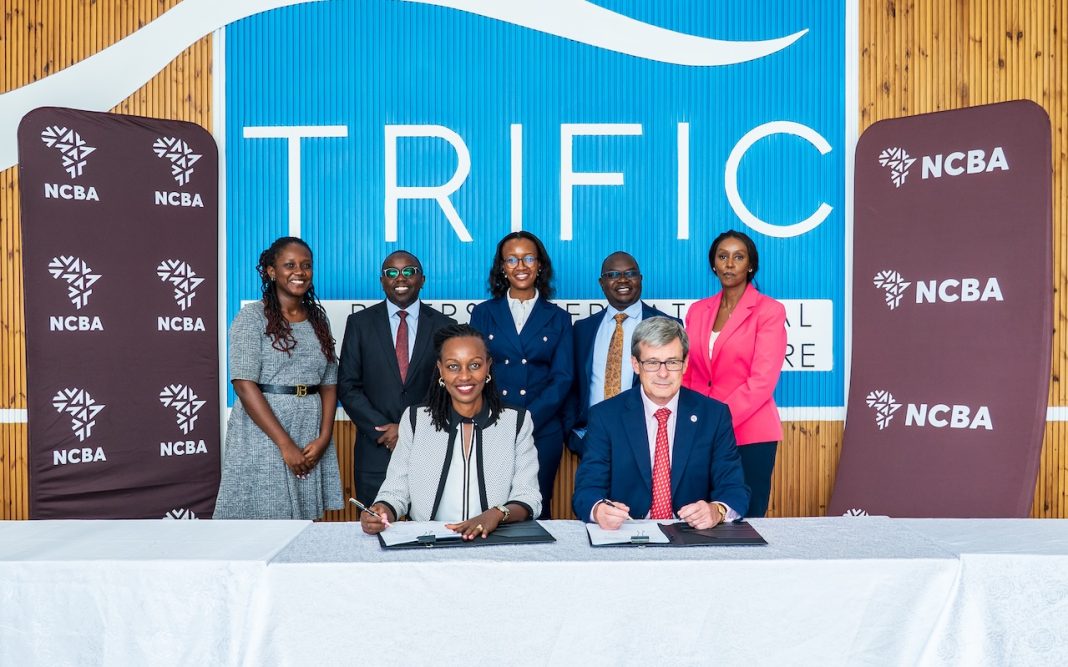
That shift in investor behaviour is helping drive interest in a new investment product entering the market: TRIFIC’s Green USD Income Real Estate Investment Trust (I-REIT), a vehicle that combines commercial real estate ownership with dollar-denominated income and stock market liquidity.
While REITs are not new globally, this particular offering stands out because it introduces a combination rarely seen in Kenya’s capital markets. It is dollar-denominated, green-certified, income-generating, and accessible to both retail and institutional investors.
Owning Property Without Becoming a Landlord
One of the biggest obstacles to property investment has always been the cost of entry.
Buying commercial real estate requires substantial capital, not to mention the responsibilities that come with managing tenants, maintaining buildings, collecting rent, and dealing with vacancies.
An Income Real Estate Investment Trust offers a different approach.
Instead of purchasing an entire property, investors buy units in a professionally managed trust that owns income-producing assets. Rental income generated by those properties is collected by the trust, operational expenses are paid, and the remaining income is distributed to investors.
The model allows investors to gain exposure to commercial real estate without taking on the day-to-day responsibilities traditionally associated with property ownership.
For many, it represents a simpler way to participate in one of the world’s most established asset classes.
Why the Dollar Element Matters
Perhaps the feature attracting the most attention is the trust’s dollar-denominated structure.
The underlying property, North Tower within the TRIFIC ecosystem at Two Rivers, generates rental income from tenants who pay in U.S. dollars. As a result, investor distributions are also denominated in dollars.
For investors concerned about currency depreciation, this creates a degree of protection because both the rental income and investment returns are linked to the same currency.
Over the years, dollar-denominated assets have become increasingly attractive to investors seeking diversification beyond local currency holdings. While no investment is risk-free, hard-currency income can help reduce exposure to exchange rate fluctuations that affect purchasing power over time.
This feature makes the REIT particularly relevant for investors already holding foreign currency deposits, offshore investments, or those seeking to balance portfolios heavily concentrated in shilling-based assets.
A Building Designed With Sustainability in Mind
The trust is also being marketed as Kenya’s first green USD-denominated income REIT.
The underlying asset carries EDGE green building certification and aligns with the Capital Markets Authority’s framework for sustainable investment products.
While environmental certification is often viewed as a sustainability credential, it can also have practical business benefits.
Buildings designed to consume less energy and water generally operate more efficiently, helping lower running costs over time. They can also appeal to multinational corporations and large organisations that increasingly consider environmental performance when selecting office space.
Within the broader Two Rivers ecosystem, investments in solar power generation and water treatment infrastructure are intended to improve operational efficiency while supporting long-term sustainability goals.
Understanding the 8 Percent Yield
Much of the conversation around the offering has centred on its projected annual distribution yield of approximately 8 percent.
In practical terms, this means investors are expected to receive regular income generated from rental payments made by tenants occupying the property. These distributions are scheduled to be paid semi-annually.
Under Kenya’s REIT regulations, income REITs are required to distribute at least 80 percent of their distributable income to investors. TRIFIC has indicated it intends to distribute approximately 95 percent, leaving only a small portion within the trust for operational requirements.
The building’s lease agreements also include annual rental escalation clauses of around 3.5 percent, providing a mechanism for rental income growth over time, provided occupancy levels remain healthy.
For investors comparing available options, the attraction is straightforward. The projected yield is significantly higher than many traditional dollar savings products while still being backed by a physical income-generating asset.
Accessibility Is Expanding
Commercial real estate has traditionally been viewed as an asset class reserved for wealthy individuals, pension funds, insurance companies, and institutional investors.
The structure of the REIT lowers that barrier considerably.
Units are priced at one U.S. dollar each, with a minimum investment of 1,000 units. That translates to a minimum entry point of approximately US$1,000, making participation more accessible than purchasing commercial property directly.
For many investors, this creates an opportunity to diversify into commercial real estate without committing millions of shillings to a single property acquisition.
Occupancy and Tenant Quality Remain Key
Like any property investment, long-term performance ultimately depends on the quality of the underlying asset and its tenants.
At the time of the offering, North Tower was reported to be approximately 92 percent occupied. The property’s anchor tenant is Teleperformance, one of the world’s largest business process outsourcing companies, alongside a mix of firms operating across technology, professional services, financial services, and business support sectors.
Strong occupancy levels help support stable rental income, while a diversified tenant mix can reduce reliance on a single source of revenue.
Investors will nevertheless continue to monitor occupancy rates, tenant retention, and lease performance, as these factors play a significant role in determining future distributions.
A Sign of a Maturing Capital Market
The arrival of products such as the Green USD I-REIT reflects a broader evolution taking place within Kenya’s financial markets.
Investors today are increasingly looking beyond traditional choices of land, bank deposits, and equities. They are seeking diversified portfolios that combine income generation, liquidity, sustainability, and protection against economic uncertainty.
REITs offer one way to achieve that balance.
For Kenya’s capital markets, the introduction of a dollar-denominated, green-certified income REIT signals growing sophistication in the range of products available to investors. It also demonstrates how real estate, sustainability, and capital markets can increasingly work together to create new opportunities.
Whether the offering ultimately delivers on its long-term objectives will depend on market conditions, tenant performance, and execution. Yet its arrival highlights an important shift. Property investment in Kenya is no longer limited to buying land or constructing buildings.
For a growing number of investors, ownership is becoming more flexible, more accessible, and increasingly connected to the broader financial markets.
For this kind of news and more, visit us at MUIAA Ltd where we offer research, advice and build modern day innovations in blockchain, fintech, and digital finance across emerging markets. We help turn ground-level realities into practical financial tools.