
NAIROBI—Kenya is steering billions of dollars in international aid toward a single, urgent national goal: creating jobs. In a major shift, the government is retooling its long-standing partnership with the World Bank to ensure that a massive $5.96 billion portfolio of projects directly fuels employment and builds up the country’s industries.
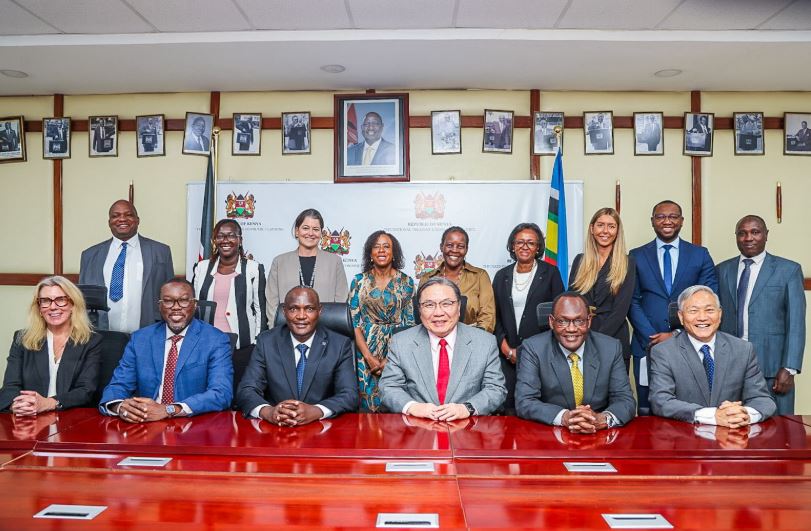
This move follows high-level talks in Nairobi this week between Kenyan officials and top World Bank leaders. The aim is to lock in every dollar of aid behind President William Ruto’s “Bottom-Up” economic plan, which promises to lift up ordinary Kenyans by boosting small businesses and manufacturing.
“For too long, development money and our biggest needs haven’t always been in perfect sync,” said a senior finance ministry official who was part of the discussions. “This review is about changing that. We are aligning this entire portfolio so it builds not just roads or power plants, but pathways to paychecks for our people.”
The Scale of the Partnership
Kenya’s relationship with the World Bank is deep and decades-old, helping to build everything from highways to universities. Today, that partnership is active in 31 major projects across the country, with the World Bank’s total commitment standing at $5.96 billion.
These projects touch nearly every part of the economy:
- Power and Transport: Funding for geothermal energy, wind farms, roads, and railways.
- Essential Services: Support for schools, water systems, and affordable housing.
- Government Reform: Programs to make national and county governments work better.
The talks this week, led by Treasury Cabinet Secretary John Mbadi and World Bank Managing Director Wencai Zhang, were not about starting from scratch. Instead, they focused on sharpening the focus of this existing, enormous financial pipeline.
Why the Urgent Shift to Jobs?
The reason for this new direction is no secret: Kenya’s young population.
With a median age of just 20, hundreds of thousands of young Kenyans enter the workforce each year, but the economy has not been creating formal jobs fast enough to absorb them. This “youth bulge” is both a potential engine for future growth and a pressing social challenge.
The government’s “Bottom-Up” plan is its answer. The idea is to focus economic energy on the small traders, farmers, and startups at the base of the economic pyramid. The World Bank review is the practical mechanism to make that happen.
A prime example is the National Youth Opportunities (NYOTA) Programme. Backed by the World Bank, NYOTA provides young entrepreneurs with startup cash, business training, and help finding customers. Officials spent considerable time in the Nairobi meetings reviewing NYOTA’s progress, seeing it as a direct model for how aid can create jobs.
Connecting Strengths to New Ambitions
This refocus also allows Kenya to connect its past successes to its future plans. Kenya is already a recognized leader in clean energy in Africa, thanks in part to past investments. The country is a top destination for investment in sectors like manufacturing, according to a recent regional report.
The new strategy aims to link these facts. The goal is to use Kenya’s reliable, clean electricity—much of it funded by earlier aid—to power new factories and industries. This creates a powerful cycle: better energy attracts manufacturers, and those factories create the jobs that the country desperately needs.
How To Get It Done
Repurposing such a large portfolio is a complex task. Success will depend on breaking down old barriers between different government ministries. For instance, the work of the Energy Ministry will now be judged not just on how much power it generates, but on how much of that power is used by new Kenyan industries.
Furthermore, the World Bank’s money is meant to enable growth, not replace it. The real job creation must come from the private sector—both local entrepreneurs and foreign companies. The government’s role, supported by the aid, is to make Kenya the most attractive place for those businesses to invest and hire.
The talks also looked to the future, previewing the next round of World Bank funding set to begin next year. The focus for that new cycle is expected to be “inclusive growth”—a perfect fit for Kenya’s jobs-first agenda, signaling that this week’s alignment is meant to last.
A New Model for Aid
Kenya’s decisive move represents a broader trend in how countries approach development aid. It is a move away from a passive donor-recipient relationship toward a strategic partnership based on clear, home-grown national priorities.
“Kenya is not just a passenger in its own development story anymore,” observed an economist familiar with the discussions. “It is forcefully taking the wheel and telling its partners, ‘Here is our map. Help us drive there.'”
The final measure of success for this ambitious reset will not be in policy papers or loan agreements. It will be in the bustling new industrial parks, the thriving small businesses, and the millions of Kenyan families whose lives are improved by stable, dignified work. By refocusing a historic partnership on the urgent needs of today, Kenya is betting its future on the productivity and promise of its people.
To learn how your business can benefit from customized financial solutions, visit MUIAA Ltd. MUIAA offers expert guidance on funding opportunities both for personal and business. Contact us today for personalized support in meeting your business needs within Kenya’s evolving digital economy.