

By Antonio Obwaya
Nairobi, Kenya — In Africa’s fast-changing digital economy, true innovation isn’t just about flashy apps or billion-dollar start-ups. It’s being driven by organizations like AfricaNenda Foundation — quietly rewiring the continent’s financial backbone to make real-time payments accessible to everyone.”
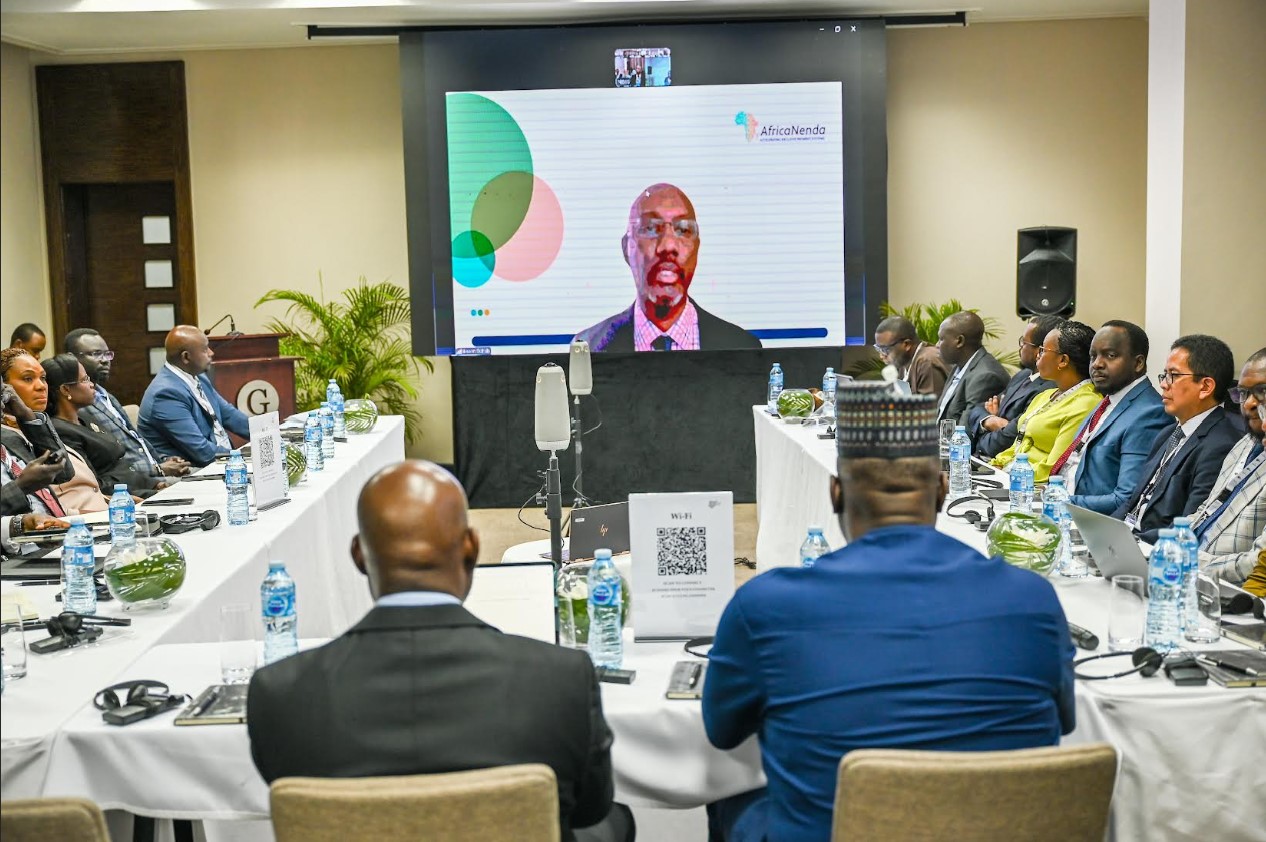
With over 400 million Africans still financially excluded, especially women, youth, and informal sector workers, there’s growing urgency to build payment systems that work for everyone, “not just the privileged few,” said Dr. Robert Ochola, CEO of AfricaNenda Foundation, during a recent Peer Learning Visit in Lagos, Nigeria. AfricaNenda Foundation is responding to this need by working closely with central banks, regulators, and digital finance stakeholders to ensure that real-time, interoperable, and affordable digital payments become a reality in every corner of the continent.
“The question before us is not: Can we build payment systems? Nigeria, through NIBSS, has already shown us that we can,” he said. “The real question is: Can we build inclusive, scalable systems that serve every citizen — not just the privileged few?” he added.
AfricaNenda Foundation’s Role: Partnering for Scalable Inclusion
AfricaNenda isn’t a fintech or a payments operator. Instead, it acts as a trusted technical partner, supporting national stakeholders—governments, central banks, regulators, and payment providers—across the full lifecycle of IIPS development. From diagnostics and scheme design to regulatory alignment and capacity building, AfricaNenda provides strategic guidance and coordination to help countries design real-time, interoperable, and inclusive payment systems.
“We’re not here as spectators,” Dr. Ochola emphasized. “We’re here to walk alongside countries—providing technical support, building regulatory capacity, and convening communities of practice.”
Today, AfricaNenda’s work spans 13 countries, advancing financial inclusion by strengthening national digital infrastructure and fostering local collaboration.
Lessons from Nigeria’s NIBSS System
The Peer Learning Visit held in June 2025, co-hosted with Nigeria’s Inter-Bank Settlement System (NIBSS), highlighted one aspect of AfricaNenda’s broader work. The event brought together delegates from over 10 African countries to learn from Nigeria’s experience in developing a mature and inclusive instant payment system.
Through in-depth sessions on governance, interoperability, and 24/7 operations, participants gained practical insights into how national systems can be designed to connect banks, fintechs, and agents in ways that serve both urban and rural populations. It also reinforced the value of cross-country learning in accelerating progress across the continent. “This is not just about technology,” Dr. Ochola said. “It’s about building trust at national scale. It’s a reminder to all of us: Africa can build its own systems — and make them world-class,” he emphasized.
Why Instant Payments Matter to the Common Person
What makes IIPS truly impactful is their ability to serve people using basic mobile phones, not just smartphones. With USSD compatibility, agent networks, and inclusive pricing, IIPS empower:
- Market women to receive real-time payments without needing smartphones
- Youth and gig workers to access earnings instantly
- Cross-border traders to send and receive money affordably
“Let us not confuse digitization with inclusion,” Dr. Ochola warned. “Real inclusion means: USSD for those without smartphones, agent networks that reach remote areas, pricing that favors the poor, language access and intuitive design, systems built for the informal sector,” he explained.
Five Reflections to Guide the Journey
Dr. Ochola also shared five core reflections for building inclusive, scalable IIPS:
- “Design from the margins inward — build for those who are excluded: women, youth, MSME,” he advised.
- “Foster public-private ecosystems — let fintechs plug into the rails. Encourage healthy collaboration,” he said.
- “Strengthen governance — decisions on rules, pricing, and consumer protection are just as important as APIs,” he emphasized.
- “Make interoperability a cornerstone through the scheme — true regional integration needs institutional trust,” he noted.
- “Let data drive action — disaggregated data helps us see who is left behind — and what to fix,” he added.
Looking Ahead: The Road to SIIPS 2025
The Lagos convening sets the stage for AfricaNenda’s upcoming State of Inclusive Instant Payment Systems (SIIPS) 2025 Report, which will be launched on November 13, 2025, in Eswatini. The report will provide new data, insights, and policy
recommendations to help governments and partners close the remaining gaps in digital finance inclusion.
In preparation, AfricaNenda is engaging grassroots media, journalists, and regional platforms to elevate awareness and foster action.
“Let this gathering move us — from vision to execution, from isolation to integration, from exclusion to empowerment. This is a continental movement, no African country should walk this path alone.” Dr. Ochola urged.
About AfricaNenda
AfricaNenda Foundation is an Africa-based, African-led non-profit working with central banks and payment ecosystem stakeholders to accelerate the design, development, launch, and improvement of inclusive instant payment systems. Our team of 24 experts in 13 countries provides technical expertise, builds capacity, shares knowledge, and advocates for inclusivity across the instant payment system project lifecycle. Through this work, we aim to help deliver the power of seamless and affordable digital payments to 260 million financially excluded Africans by 2030.
To learn how your business can benefit from customized financial solutions, visit MUIAA Ltd. MUIAA offers expert guidance on funding opportunities both for personal and business. Contact us today for personalized support in meeting your business needs within Kenya’s evolving digital economy.