




1. Introduction
International trade depends on trust.
An importer needs confidence that goods will arrive. An exporter needs confidence that payment will be made. Banks need to verify documents. Insurers need accurate information. Customs authorities need to know what is entering or leaving a country.
Behind a single international shipment can be a long chain of businesses, documents, payments, approvals, and regulatory checks.
Much of this process still depends on paper documents, emails, spreadsheets, separate databases, and manual verification.
This creates delays and increases the cost of doing business.
Blockchain offers another way to manage trade information.
A shared digital ledger can allow authorised participants to access the same record of a transaction while maintaining a verifiable history of what has happened.
When combined with smart contracts, digital documents, tokenized assets, and digital payments, blockchain could change how trade finance works.
For African businesses, the opportunity is particularly interesting.
International trade is essential to economic growth, yet businesses still face challenges around financing, documentation, cross-border payments, fraud, and access to financial services.
Blockchain won’t solve all of these problems.
It can, however, provide new infrastructure for making trade more transparent, connected, and efficient.
2. What Is Trade Finance?
Trade finance refers to the financial products and services that help businesses buy and sell goods and services, particularly when transactions involve different countries.
A business may need financing before receiving payment from its customer.
A bank can provide financial support while also helping manage the risks involved in the transaction.
Common trade finance products include:
- Letters of credit.
- Trade loans.
- Invoice financing.
- Bank guarantees.
- Documentary collections.
- Supply chain finance.
- Export financing.
- Import financing.
Trade finance helps bridge the gap between when goods are shipped and when sellers receive payment.
3. How Traditional Trade Finance Works
A typical international trade transaction can involve several parties.
3.1 The Buyer
The buyer agrees to purchase goods from an overseas supplier.
The buyer may need financing to pay for the goods.
3.2 The Seller
The seller prepares and ships the goods.
The seller may need assurance that payment will be received after meeting the agreed conditions.
3.3 Banks
Banks can provide financing, guarantees, payment services, and document verification.
Depending on the transaction, several banks may be involved.
3.4 Shipping and Logistics Companies
Transport providers move the goods between countries and generate documents confirming shipment and delivery.
3.5 Insurers
Insurance companies may protect the goods against specified risks during transportation.
3.6 Customs Authorities
Customs authorities verify information about goods entering or leaving a country.
3.7 Regulators
Financial institutions also need to comply with requirements involving AML, KYC, sanctions, taxation, and trade regulations.
The result is a complex network of participants.
Each participant may maintain its own records.
That is where some of the problems begin.
4. Problems With Traditional Trade Finance
4.1 Too Many Documents
International trade generates a significant amount of documentation.
A transaction may involve:
- Commercial invoices.
- Purchase orders.
- Bills of lading.
- Certificates of origin.
- Insurance documents.
- Customs declarations.
- Inspection certificates.
- Letters of credit.
Documents may move between businesses, banks, shipping companies, insurers, and government agencies.
4.2 Manual Verification
Many documents still need to be reviewed manually.
A bank may need to compare information across several documents before approving financing or releasing payment.
This takes time.
4.3 Lack of Shared Information
Different participants often have different versions of transaction information.
One party may update a record while another continues working with an older version.
This creates reconciliation problems.
4.4 Fraud
Trade finance can be exposed to fraudulent invoices, duplicate financing, forged documents, and false claims about goods.
When information is fragmented across multiple systems, detecting inconsistencies becomes harder.
4.5 Slow Payments
Cross-border payments can involve several intermediaries.
Currency conversion, compliance checks, banking relationships, and settlement processes can add delays.
4.6 Limited Access to Finance
Small businesses may struggle to obtain trade finance because financial institutions don’t have enough reliable information about their transactions.
This is particularly important in emerging markets.
A business may have legitimate trade activity but still lack the documentation or financial history required to obtain affordable financing.
5. How Blockchain Can Be Used in Trade Finance
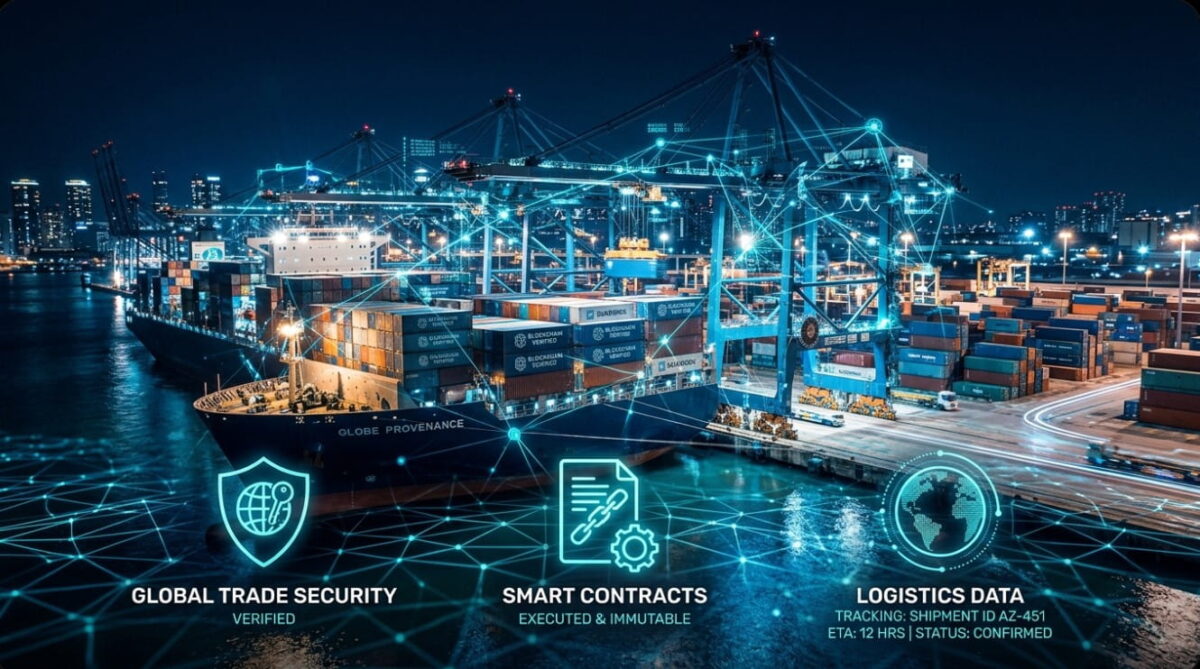
Blockchain can create a shared digital record for a trade transaction.
Instead of every participant maintaining completely separate records, authorised participants can access relevant information from a common ledger.
The blockchain can record events such as:
- Purchase agreement created.
- Goods prepared.
- Shipment confirmed.
- Documents issued.
- Goods inspected.
- Customs clearance completed.
- Delivery confirmed.
- Payment released.
The exact information stored would depend on the system.
Sensitive documents don’t necessarily need to be placed directly on a public blockchain.
Instead, the blockchain can store verifiable references or records while the underlying documents remain securely stored elsewhere.
6. Blockchain and Digital Trade Documents
Documents are central to international trade.
Blockchain can help make these documents easier to verify and share.
6.1 Digital Bills of Lading
A bill of lading provides important information about goods being transported.
Traditional paper bills can be lost, delayed, or duplicated.
A digital version can be linked to a blockchain record.
This can make it easier for authorised parties to verify ownership and shipment information.
6.2 Certificates of Origin
A certificate of origin confirms where goods were produced.
A digitally verifiable certificate can reduce the risk of forged documents.
6.3 Digital Invoices
Invoices can be linked to verified transactions.
This can help financial institutions assess whether an invoice represents a genuine commercial transaction.
6.4 Digital Insurance Documents
Insurance information can also be connected to the trade transaction.
This creates a more complete digital record of the shipment.
7. Blockchain and Letters of Credit
Letters of credit are widely used in international trade.
A bank provides an undertaking to pay the seller when specified conditions are met.
The process can involve several documents and multiple parties.
Blockchain and smart contracts could automate parts of this process.
7.1 Digital Letter of Credit
A digital letter of credit could be represented through a secure digital system.
The relevant conditions could be recorded and verified electronically.
7.2 Automated Verification
A smart contract could check whether predefined conditions have been satisfied.
For example:
- Shipment confirmed.
- Required documents received.
- Inspection completed.
- Customs clearance confirmed.
Once the required conditions are satisfied, the system could trigger the next stage of the transaction.
7.3 Faster Settlement
Automation could reduce the amount of manual processing required.
This could shorten the time between shipment and payment.
7.4 Reduced Errors
Automated processes can reduce errors caused by manually entering the same information into multiple systems.
Human oversight would still be important for exceptions and disputes.
8. Smart Contracts in Trade Finance
Smart contracts are programs that execute predefined instructions when specified conditions are met.
They can be useful in trade finance because many transactions already operate according to contractual conditions.
For example:
Payment is released after delivery is confirmed and the required documents are verified.
A smart contract can encode such conditions.
8.1 Conditional Payments
Payment can be linked to specific events.
This could reduce delays between completing a trade requirement and releasing funds.
8.2 Automated Financing
A financing agreement could automatically trigger when verified trade events occur.
For example, a bank could release financing after receiving verified shipment information.
8.3 Automated Insurance Claims
Smart contracts could potentially support certain insurance claims.
If predefined conditions are verified, the system could initiate a payment.
This would work best for clearly defined claims rather than complex cases requiring extensive investigation.
8.4 Contract Enforcement
Smart contracts can automate certain parts of an agreement.
They don’t replace courts, legal contracts, or human judgment.
They automate rules that can be expressed clearly in software.
9. Blockchain and Supply Chain Finance
Supply chain finance provides businesses with financing based on transactions within a supply chain.
Blockchain could improve visibility across the chain.
Consider a Kenyan manufacturer importing raw materials.
The transaction may involve:
- The manufacturer.
- An overseas supplier.
- A shipping company.
- A bank.
- An insurer.
- Customs authorities.
- A local distributor.
A shared blockchain record could provide authorised participants with verified information about the transaction.
This could help financial institutions better understand the underlying trade activity.
9.1 Better Transaction Visibility
Banks can see verified events rather than relying entirely on documents submitted after the fact.
9.2 Faster Financing Decisions
Better information can potentially make it easier for banks to assess trade finance applications.
9.3 Reduced Duplicate Financing
If financing events are recorded in a shared system, it could become easier to identify whether the same invoice or shipment has already been financed.
9.4 Stronger Supplier Relationships
Faster access to financing can help suppliers manage cash flow.
This can make supply chains more resilient.
10. Blockchain and Invoice Financing
Invoice financing allows businesses to access money before their customers pay outstanding invoices.
Blockchain could help verify the authenticity and status of invoices.
10.1 Verified Invoices
An invoice can be linked to a verified commercial transaction.
This gives lenders more confidence that the invoice represents genuine activity.
10.2 Reducing Duplicate Invoices
A shared ledger can help identify whether an invoice has already been submitted for financing.
10.3 Better Access for SMEs
Small and medium-sized businesses often struggle with working capital.
Verified transaction records could potentially help lenders assess businesses using actual trade activity.
This could expand access to financing.
11. Blockchain and Trade Fraud
Fraud is one of the biggest challenges in trade finance.
Blockchain doesn’t make fraud impossible.
It can, however, make certain types of manipulation more difficult to hide.
11.1 Immutable Transaction Records
Once information has been recorded and confirmed on a properly designed blockchain, changing the historical record becomes difficult.
This creates a stronger audit trail.
11.2 Document Verification
Digital documents can be connected to verified records.
This makes it easier for authorised participants to determine whether a document has been altered.
11.3 Tracking Goods
Blockchain can record important events throughout the supply chain.
For example:
- Goods manufactured.
- Goods inspected.
- Goods loaded.
- Goods shipped.
- Goods received.
This creates greater visibility.
11.4 Detecting Inconsistencies
If the information from different participants doesn’t match, the discrepancy can be investigated before financing or payment is completed.
12. Blockchain and AML and KYC in Trade Finance
International trade involves significant compliance requirements.
Financial institutions need to understand who their customers are and where funds are going.
Blockchain can support this process.
12.1 Shared Identity Information
A verified digital identity can potentially be reused across authorised financial services.
This can reduce repetitive verification.
12.2 Transaction Traceability
Blockchain can create an auditable history of transactions.
This can support compliance teams investigating suspicious activity.
12.3 Sanctions Screening
Trade transactions often need to be checked against sanctions and restricted-party lists.
Blockchain doesn’t replace screening systems, but verified transaction information can make the process more reliable.
12.4 Reducing Repeated KYC
If regulated institutions can securely access verified customer credentials, businesses may not need to submit the same documents repeatedly.
This could make onboarding faster.
13. Blockchain and Customs
Customs authorities play a major role in international trade.
They need accurate information about goods, their origin, value, and destination.
Blockchain could help connect customs information with other parts of the trade transaction.
13.1 Digital Customs Documents
Customs documents could be issued and verified digitally.
13.2 Product Traceability
Authorities could potentially trace goods through the supply chain.
13.3 Faster Clearance
If required information is already verified and available digitally, customs processing could become more efficient.
13.4 Reducing False Declarations
A shared transaction history could make it harder to manipulate information about goods.
The effectiveness would depend heavily on the accuracy of the data entering the system.
Blockchain can protect recorded data from unauthorised alteration.
It cannot guarantee that the original information was truthful.
14. Blockchain and Cross-Border Trade Payments
Trade finance and payments are closely connected.
A business may receive financing in one country while paying a supplier in another.
Blockchain-based payment infrastructure could potentially reduce some of the friction involved.
14.1 Faster Payments
Digital assets or blockchain-based settlement systems can operate continuously.
This could reduce some traditional settlement delays.
14.2 Reduced Intermediaries
If participating institutions connect directly through interoperable systems, some payment transactions may require fewer intermediaries.
14.3 Currency Conversion
Blockchain could also support new approaches to foreign exchange settlement.
This remains technically and regulatorily complex, particularly when different national currencies and monetary systems are involved.
14.4 Integration With CBDCs
Central bank digital currencies could eventually support cross-border trade settlement.
This connects trade finance with the broader blockchain and central banking discussion covered earlier in the series.
15. Blockchain and Trade Finance in Africa
Africa presents a significant opportunity for blockchain-based trade finance.
The continent has a large network of businesses trading across borders, while many SMEs still face difficulties accessing affordable financial services.
15.1 Supporting SMEs
Small businesses are often constrained by working capital.
Verified trade records could help financial institutions understand the real activity of businesses.
15.2 Regional Trade
African businesses increasingly trade within the continent.
Better digital trade infrastructure could support regional commerce.
15.3 Informal Trade
A significant amount of economic activity occurs outside fully formalised systems.
Digital records could potentially help some businesses establish verifiable transaction histories.
However, adoption needs to be practical and affordable.
15.4 Financial Inclusion
Trade finance infrastructure can connect businesses to banks and other financial institutions.
Blockchain could support this connection by creating more reliable digital records.
16. Blockchain and Trade Finance in Kenya
Kenya is well positioned to explore digital trade finance because of its strong fintech ecosystem, digital payment adoption, and role as a regional commercial hub.
Businesses import and export agricultural products, manufactured goods, machinery, technology, and consumer products.
Each transaction can involve multiple financial and logistical processes.
16.1 Importers
Kenyan importers need to manage payments, shipping documentation, customs, insurance, and financing.
A connected digital trade platform could bring these processes closer together.
16.2 Exporters
Kenyan exporters need reliable payment mechanisms and documentation when selling into international markets.
Blockchain could provide verifiable records of transactions and shipments.
16.3 Banks
Banks could use verified trade data when assessing financing applications.
This could help reduce information gaps between businesses and lenders.
16.4 Logistics
Shipping and logistics companies could contribute verified events to a shared trade record.
16.5 Regional Trade
Kenya’s position within East Africa creates opportunities for digital trade infrastructure that connects businesses across the region.
17. Benefits of Blockchain for Trade Finance
If implemented properly, blockchain could provide several benefits.
17.1 Faster Transactions
Digital documents and automated processes can reduce delays.
17.2 Greater Transparency
Authorised participants can work from a shared record.
17.3 Better Traceability
Trade events can be recorded throughout the supply chain.
17.4 Reduced Fraud
Verified records can make certain forms of document fraud and duplicate financing more difficult.
17.5 Lower Administrative Costs
Automation can reduce repetitive manual processes.
17.6 Better Access to Financing
More reliable transaction data can potentially help SMEs demonstrate their creditworthiness and commercial activity.
17.7 Improved Cross-Border Payments
Blockchain-based payment systems could potentially reduce settlement friction.
17.8 Stronger Compliance
Verified identity and transaction records can support AML and KYC processes.
18. Challenges of Blockchain Trade Finance
Blockchain has potential, but implementation isn’t simple.
18.1 Multiple Systems
A blockchain platform only creates value if enough relevant participants use it.
A bank operating on one system and a shipping company operating on another won’t automatically benefit from blockchain.
18.2 Interoperability
Trade crosses borders.
Different countries, banks, customs authorities, and logistics companies need systems that can communicate with one another.
18.3 Data Quality
Blockchain protects recorded information.
It doesn’t guarantee that the information was correct when entered.
Bad information can still become permanently recorded.
18.4 Regulation
Trade finance involves banking, customs, taxation, data protection, payments, and international trade law.
Blockchain systems need to operate within these legal frameworks.
18.5 Privacy
Trade transactions contain commercially sensitive information.
Companies may not want competitors to see their suppliers, prices, customers, or transaction volumes.
Permissioned access and appropriate data protection are therefore important.
18.6 Cost of Adoption
Businesses and institutions need to invest in new technology, integration, training, and security.
The benefits need to justify those costs.
18.7 Legal Recognition
Digital trade documents need to be recognised under applicable laws.
Technology alone doesn’t automatically give a digital document the same legal status as a traditional document.
19. The Future of Blockchain in Trade Finance
Trade finance is moving toward greater digitalisation.
The long-term opportunity isn’t simply replacing paper documents with blockchain records.
It is creating a connected digital trade environment.
In that environment:
- Businesses can create digital trade agreements.
- Banks can verify transactions.
- Insurers can access relevant shipment information.
- Logistics companies can confirm movement of goods.
- Customs authorities can verify documentation.
- Smart contracts can automate predefined conditions.
- Financial institutions can release financing faster.
- Payments can settle through connected digital systems.
The result could be a trade transaction where information moves almost as quickly as the goods themselves.
That would represent a significant change from the fragmented processes used in many trade transactions today.
20. Frequently Asked Questions About Blockchain in Trade Finance
20.1 What is blockchain in trade finance?
Blockchain in trade finance refers to using distributed ledger technology to record, verify, and share information related to trade transactions, financing, payments, documents, and supply chains.
20.2 How can blockchain improve trade finance?
Blockchain can improve transparency, document verification, transaction tracking, settlement, fraud detection, and automation.
20.3 Can blockchain reduce trade finance fraud?
It can make certain forms of fraud more difficult by creating verifiable transaction records and reducing opportunities to manipulate or duplicate documents.
20.4 Can blockchain replace banks in trade finance?
No.
Banks can continue providing financing, payment services, guarantees, compliance, and risk management. Blockchain changes the infrastructure supporting these activities.
20.5 What are smart contracts in trade finance?
Smart contracts are software programs that automatically execute predefined instructions when specified conditions are satisfied.
20.6 Can blockchain help SMEs access trade finance?
Potentially.
Verified transaction histories can give lenders better information about a business’s actual commercial activity.
20.7 Can blockchain improve cross-border trade payments?
It can potentially make settlement faster and reduce some intermediaries, particularly when blockchain networks and payment systems are interoperable.
20.8 Can blockchain track goods?
Yes.
Blockchain can record events throughout a supply chain, such as manufacturing, inspection, shipment, customs clearance, and delivery.
20.9 Is blockchain suitable for African trade finance?
It could be, particularly where businesses face challenges involving documentation, cross-border payments, financing, and fragmented information.
Successful adoption would depend on affordability, regulation, interoperability, and participation.
20.10 Does blockchain eliminate the need for trade documents?
Not necessarily.
It can digitise, connect, and verify documents, but businesses and regulators may still require specific records.
20.11 Can blockchain be used for letters of credit?
Yes.
Blockchain and smart contracts can potentially digitise parts of the letter-of-credit process and automate certain conditions.
20.12 What is the biggest challenge for blockchain trade finance?
One of the biggest challenges is coordination.
Trade involves many participants across different countries and systems. Blockchain delivers greater value when those participants can use interoperable infrastructure.
21. Conclusion
Trade finance sits at the intersection of banking, logistics, insurance, payments, government, and international commerce.
That makes it one of the areas where blockchain’s ability to connect information could have practical value.
The technology can create shared records, improve document verification, automate certain processes, strengthen traceability, and potentially make financing and settlement faster.
For African businesses, these improvements could matter.
A small exporter shouldn’t have to wait unnecessarily for payment because documents are moving slowly between institutions. A bank shouldn’t have to rely entirely on fragmented paperwork to understand whether a trade transaction is genuine. A logistics provider, insurer, customs authority, and financial institution should ideally be able to verify the parts of a transaction relevant to their role.
Blockchain could help create that connected environment.
But adoption won’t happen simply because the technology exists.
Trade finance systems need regulatory recognition, reliable data, privacy controls, interoperability, strong cybersecurity, and participation from the institutions that make international commerce work.
The opportunity lies in building those pieces together.
How MUIAA Is Exploring Blockchain Innovation
MUIAA’s interest in blockchain goes beyond understanding the technology.
The broader goal is to explore how blockchain can solve practical problems within financial services and create new opportunities for businesses and consumers in Kenya and Africa.
Trade finance is a natural extension of that work.
The same blockchain infrastructure that can support secure identity, transparent transactions, digital payments, compliance, and financial markets can also support more connected trade.
MUIAA is exploring blockchain-powered financial products that can bring these ideas closer to practical use.
The focus is on building financial solutions around real problems, with security, transparency, automation, and accessibility at the centre.
As African trade becomes increasingly digital, the businesses and financial institutions that can connect payments, identity, financing, and transaction data will have an important role in shaping the next generation of financial services.
For this kind of news, articles, tutorials and more, visit us at MUIAA Ltd where we offer research, advice and build modern day innovations in blockchain, fintech, and digital finance across emerging markets. We help turn ground-level realities into practical financial tools.