




Almost every Kenyan knows a chama.
It could be a group of friends saving to buy land. A women’s group supporting small businesses. A youth investment club. A welfare group helping members during difficult times. Or colleagues putting money together to build wealth for the future.
Different names. Different goals. The same idea.
People achieve more when they work together.
For decades, chamas have helped millions of Kenyans save money, access affordable loans, and invest in opportunities that would have been difficult to pursue alone. Many successful businesses, farms, rental properties, and family homes have their roots in a simple savings group that decided to dream bigger together.
The strength of every chama is not the money in its account.
It’s the trust between its members.
Members trust that their contributions are recorded correctly. They trust that loans are managed fairly. They trust that leaders are accountable. They trust that every financial decision is made openly and in the best interest of the group.
That trust has carried chamas for generations.
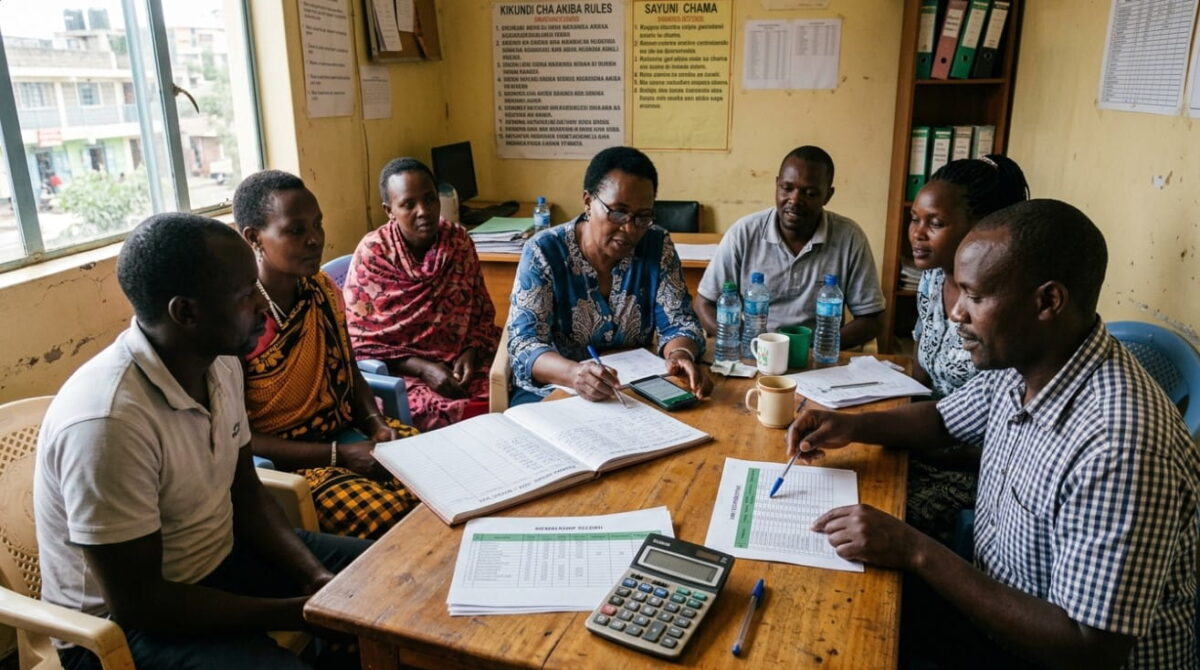
Most groups still rely on notebooks, receipt books, spreadsheets, bank statements, and WhatsApp groups to manage their daily activities. These tools are familiar, affordable, and have served many groups well over the years.
But every successful chama reaches a point where those methods begin to struggle.
A group that started with ten members may grow to fifty. Monthly savings increase. Investments become larger. Loan applications become more frequent. Meetings produce more decisions. Financial reports become more detailed.
Suddenly, managing the group becomes a full-time responsibility.
Treasurers spend hours updating records. Chairpersons answer the same questions repeatedly. Secretaries search for old meeting minutes. Members ask for contribution statements before every meeting.
None of this means the group has failed.
In fact, it usually means the opposite.
Growth creates new opportunities. It also creates new responsibilities.
As chamas become more organized, they need better ways to manage information, protect financial records, and keep every member informed. Good leadership is still essential, but leadership alone is no longer enough. Strong systems become just as important.
This is where technology begins to make a difference.
Cloud-based management platforms have already helped many organizations move away from paper records. Blockchain builds on that progress by creating a secure and transparent record of important financial activities. Every approved contribution, loan repayment, dividend payment, or governance decision becomes easier to verify and much harder to alter without authorization.
The goal is not to change how chamas operate.
The goal is to strengthen the trust that already exists.
This article explores how blockchain is helping modern savings groups improve governance, simplify financial management, and prepare for long-term growth. You’ll also discover how Chama Connect, developed by MUIAA, is bringing these ideas together in one platform built specifically for Kenyan chamas, investment groups, and cooperative organizations.
Executive Summary
Chamas continue to play an important role in Kenya’s economy. They help people save consistently, invest together, access affordable loans, and build financial security through collective effort. As these groups grow, managing members, contributions, loans, meetings, and investments becomes more demanding.
Blockchain offers a practical way to strengthen accountability without changing the way chamas work. It creates trusted digital records that improve transparency, simplify reporting, and give members greater confidence in how their group is managed.
When combined with a modern management platform, blockchain reduces paperwork, supports better governance, and helps leaders spend more time growing the chama instead of managing administration.
This guide explains how blockchain supports better chama management before introducing Chama Connect, MUIAA’s digital platform designed to help Kenyan savings groups manage their operations with greater efficiency, transparency, and confidence.
Quick Answer
How Can Blockchain Improve Chama Management?
Blockchain helps chamas keep secure and transparent digital records of contributions, loans, investments, meetings, and financial decisions. Members can verify important information more easily, leaders can manage the group more efficiently, and financial records become easier to audit. When used alongside platforms like Chama Connect, blockchain strengthens trust while reducing paperwork and improving accountability.
Excellent. This is where the article starts delivering value. We move from why chamas matter to the real challenges they face, then naturally introduce blockchain as a practical solution. The reader should feel like we’re describing their own group.
Why Traditional Chama Management Becomes Difficult
Every chama starts small.
Members know each other well. Meetings are easy to organize. Contributions are simple to track. Financial decisions happen around one table, and everyone leaves with the same understanding.
That simplicity doesn’t last forever.
As the group grows, so does the amount of work needed to keep everything running smoothly. More members mean more contributions to record, more loans to manage, and more investments to monitor. What once took a few minutes after every meeting can quickly turn into hours of administration.
The challenge isn’t that the chama is failing.
The challenge is that it has outgrown the systems that once worked perfectly.
Keeping Accurate Financial Records
Good records are the backbone of every successful chama.
Every contribution, loan, repayment, fine, dividend, and investment should be recorded accurately. Members should be able to confirm their balances without waiting for the next meeting. Leaders should also be confident that the information they share is complete and up to date.
Manual record keeping makes this harder over time.
Information often ends up in different places. Some records are written in notebooks. Others are saved in spreadsheets. Receipts may be stored in files, while important discussions happen in WhatsApp groups. When information is spread across several platforms, finding the complete picture becomes difficult.
Loan Management Can Quickly Become Complex
Loans are one of the biggest benefits of belonging to a chama.
They also create some of the biggest administrative responsibilities.
Every loan has its own terms, repayment schedule, interest calculation, and approval process. As more members borrow, keeping track of repayments becomes more demanding. A missed update or incorrect entry can create confusion during meetings and affect confidence in the records.
Most disputes don’t begin because someone acted dishonestly.
They begin because different people are working from different information.
Transparency Builds Stronger Groups
Members want to know how their money is being managed.
They want clear financial reports. They want investment updates. They want confidence that decisions are being made fairly and that everyone is following the same rules.
Providing that level of transparency takes time when records are managed manually.
Leaders often spend days preparing reports before meetings. They answer the same questions repeatedly because members cannot access information on their own. Even simple tasks can become time-consuming as the group grows.
Leadership Changes Shouldn’t Disrupt Operations
Every chama experiences leadership transitions.
Treasurers complete their terms. Secretaries are replaced. New committee members are elected. Fresh ideas help the group move forward.
Unfortunately, changing leaders can also create challenges.
Financial records may not be handed over properly. Documents can go missing. Passwords may be forgotten. Important files sometimes remain on personal laptops or phones. The new leadership spends valuable time trying to rebuild information that should have been readily available.
A well-managed chama should never depend on one person to keep its records.
It should depend on a reliable system.
Governance Matters More as Chamas Grow
Growth brings new opportunities.
It also brings greater responsibility.
As a chama begins investing larger amounts of money, members naturally expect stronger governance. They want decisions to follow clear procedures. They expect approvals to be documented. They want meeting minutes to be available whenever questions arise.
Strong governance protects both the leadership and the members.
It reduces misunderstandings and makes it easier to resolve questions using facts instead of memory.
How Blockchain Strengthens Chama Management
Technology cannot replace good leadership.
It cannot replace trust between members either.
What it can do is support both.
Blockchain gives chamas a more reliable way to manage important records. Instead of depending on paperwork or scattered files, key financial activities can be recorded in a secure digital ledger that creates a clear history of what happened and when it happened.
Think of it as a permanent record book that grows with the chama.
Every approved contribution, loan repayment, dividend payment, or governance decision becomes part of the group’s financial history. That history remains available whenever members need to review it.
The value isn’t in the technology itself.
The value is the confidence it gives members.
Better Transparency
Members don’t have to rely on verbal updates alone.
Financial information can be viewed through accurate digital records. This creates greater confidence in the way the chama is managed and reduces unnecessary disagreements.
Stronger Accountability
Every important financial action leaves a clear record.
Approvals, repayments, investments, and member transactions become easier to trace. Leaders spend less time proving what happened because the records already tell the story.
Simpler Audits
Preparing financial reports becomes easier when records are organized from the beginning.
Instead of searching through multiple notebooks and spreadsheets, leaders can access complete transaction histories whenever they are needed. Internal reviews become faster, and external audits become less stressful.
Better Member Confidence
People are more likely to invest when they trust the system.
Clear records, timely reports, and transparent governance give members confidence that their savings are being managed responsibly. That confidence encourages long-term participation and supports sustainable growth.
Traditional Chama Management vs Blockchain-Enabled Management
| Traditional Management | Blockchain-Enabled Management |
|---|---|
| Paper records and spreadsheets | Secure digital records |
| Manual contribution tracking | Automated contribution history |
| Information stored in different places | Centralized and transparent records |
| Time-consuming report preparation | Faster financial reporting |
| Difficult record verification | Easy transaction verification |
| Leadership handovers can be challenging | Shared institutional records |
| Greater risk of missing documents | Permanent digital audit trail |
| Manual loan tracking | Structured digital loan records |
Practical Ways Blockchain Can Support Chama Management
The value of blockchain isn’t measured by how advanced the technology is.
It’s measured by the problems it helps solve.
For most chamas, the biggest challenges are not technical. They are administrative. Leaders spend time updating records, preparing reports, following up on loan repayments, and answering questions from members. As the group grows, these tasks become more demanding.
Blockchain supports these activities by creating reliable records that everyone can trust.
Let’s look at where it can make the biggest difference.
Managing Member Contributions
Every chama depends on regular contributions.
Whether members contribute weekly or monthly, every payment needs to be recorded correctly. Members also expect to know how much they have contributed and whether their payments are up to date.
Manual tracking works for small groups. But mistakes become more common as membership grows.
A blockchain-supported system creates a clear history of every contribution. Each payment is linked to the member’s account and recorded with the date and amount. Once approved, the record becomes part of the group’s financial history.
This makes it easier to answer common questions.
- Has this month’s contribution been received?
- How much has each member contributed this year?
- Are there any outstanding balances?
Instead of searching through notebooks or spreadsheets, leaders can access accurate records within seconds.
Keeping Loan Records Organized
Many chamas provide loans to their members.
These loans help families pay school fees, expand businesses, cover emergencies, or invest in income-generating projects. Managing them well is essential to the success of the group.
Every loan creates several records.
There is the application, the approval, the amount issued, the repayment schedule, interest charged, and the repayment history. If any of this information is missing or inaccurate, misunderstandings can arise.
Blockchain creates a permanent history for every loan.
Members can see when a loan was approved, how much has been repaid, and what balance remains. Leaders can generate reports more easily, while the loan committee works from the same accurate information.
Improving Financial Transparency
Transparency is one of the strongest foundations of a successful chama.
Members contribute with confidence when they know their money is being managed responsibly. They also appreciate regular updates on savings, investments, and the overall financial position of the group.
Preparing these reports manually can take hours.
Treasurers often spend days compiling figures before meetings. Even then, members may still request additional clarification.
Digital records make this process much easier.
Instead of creating reports from scratch every month, information is already organized. Leaders spend less time preparing reports and more time discussing opportunities for growth.
Supporting Better Governance
Every chama operates under a set of rules.
These rules guide how members join, how leaders are elected, how loans are approved, and how important decisions are made.
Good governance depends on proper documentation.
Meeting minutes, approvals, financial reports, and policy changes should all be recorded and stored safely. This creates consistency and protects both the leadership and the members.
Blockchain strengthens governance by creating a trusted history of important decisions.
Instead of relying on memory, the group can refer to accurate records whenever questions arise.
Making Leadership Transitions Easier
Leadership changes are a normal part of every healthy chama.
New ideas bring fresh energy and help the group continue growing. But leadership transitions can also create uncertainty if records are incomplete or scattered across different devices.
A digital management system protects the group’s institutional memory.
Important information remains with the chama rather than with individual office bearers. New leaders can access historical records, understand previous decisions, and continue managing the group without starting from scratch.
This creates continuity and protects years of hard work.
Managing Documents in One Place
Every chama generates important documents.
Registration certificates.
Constitutions.
Meeting minutes.
Investment agreements.
Loan application forms.
Financial statements.
Keeping these documents in different folders, emails, or phones increases the risk of losing important information.
A modern digital platform keeps everything organized in one secure location. Members with the right permissions can access the documents they need without searching through multiple devices or physical files.
Strengthening Communication Between Members
Good communication keeps members engaged.
Meeting reminders, contribution notices, loan updates, and important announcements should reach members on time.
Many groups rely entirely on messaging apps.
While these platforms are useful, important information can easily get buried under everyday conversations. Finding an announcement from several months ago can become difficult.
Digital management platforms bring communication together with financial records.
Members receive updates from the same system that manages contributions, loans, and reports. This creates a more organized experience and reduces confusion.
Helping Chamas Prepare for Future Growth
Every successful chama hopes to grow.
More members join.
Savings increase.
Investment opportunities expand.
Some groups eventually register as cooperative societies or evolve into SACCOs.
Growth should be exciting.
It should not create administrative pressure.
Building strong digital systems early helps chamas prepare for that future. Instead of replacing their processes later, they strengthen them step by step as the organization grows.
Technology becomes an enabler, not a disruption.
Blockchain Supports People. It Doesn’t Replace Them.
One common misconception is that blockchain replaces the role of leaders.
It doesn’t.
A chairman still provides direction. A secretary still records meetings. A treasurer still oversees the group’s finances. Committees still review loan applications and make decisions.
Blockchain simply gives everyone better tools.
It helps leaders manage information more efficiently. It helps members access reliable records. Most importantly, it helps protect the trust that every successful chama is built on.
That is where its real value lies.
From Blockchain to Better Chama Management
By now, one thing should be clear.
Blockchain is not a replacement for good leadership.
It doesn’t make decisions for the group. It doesn’t collect contributions or approve loans. Those responsibilities will always belong to the members and the elected officials.
What blockchain does is strengthen the systems that support those decisions.
It gives chamas a reliable way to manage records, improve transparency, and reduce the administrative burden that comes with growth. Combined with cloud technology, it creates a strong foundation for modern community finance.
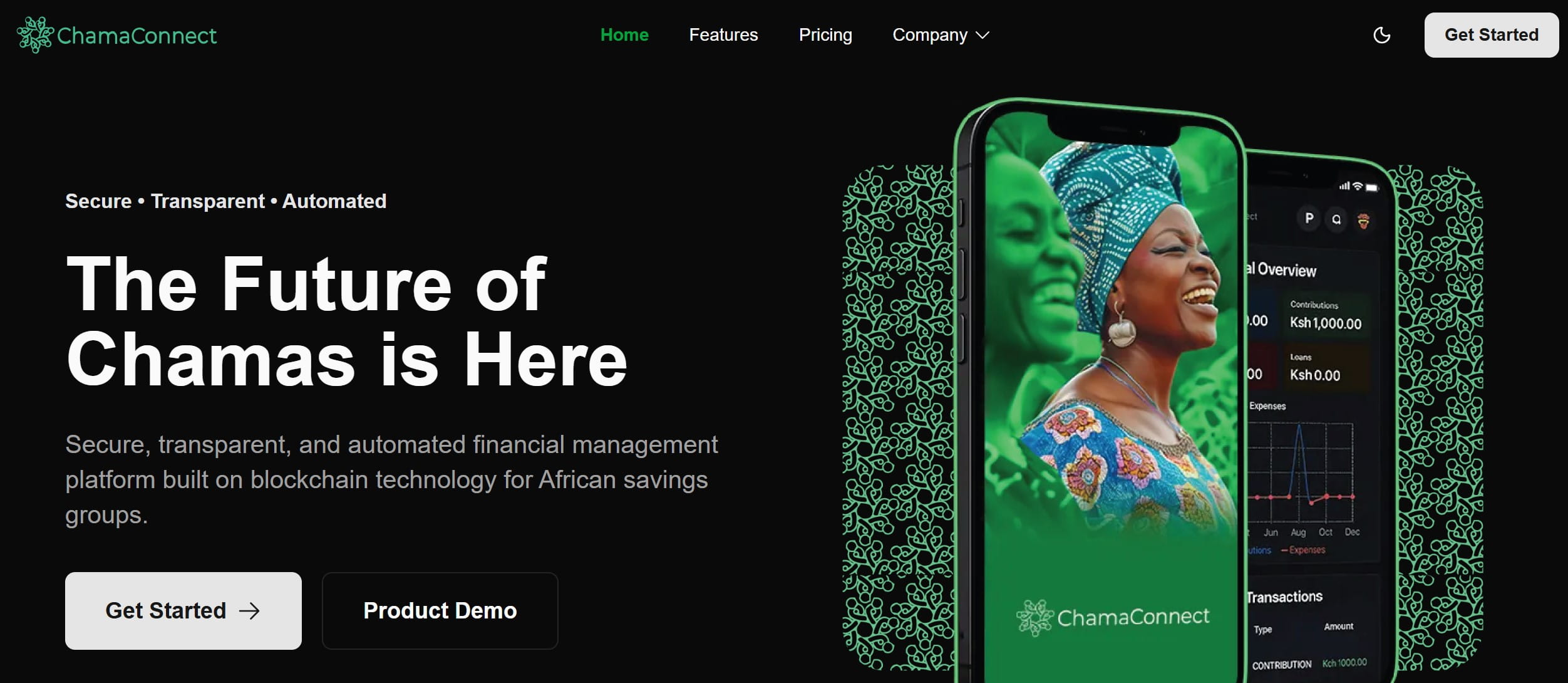
That is the thinking behind Chama Connect.
What Is Chama Connect?
Every successful product starts with a real problem.
For many years, MUIAA worked closely with financial institutions, cooperative organizations, and digital transformation projects across Kenya. During that time, one challenge kept coming up.
Many chamas were growing.
Their savings were increasing. Their investments were becoming more ambitious. Membership was expanding. But the systems used to manage those activities were not keeping pace.
Some groups relied entirely on paper records. Others used spreadsheets shared between committee members. Important documents were stored on personal laptops. Meeting updates were scattered across different WhatsApp groups.
The commitment was there.
The leadership was there.
The opportunity was there.
What many groups needed was a better way to bring everything together.
Chama Connect was developed to solve that challenge.
It provides one platform where savings groups can manage their day-to-day activities while creating a stronger foundation for accountability, transparency, and future growth.
The platform is designed for Kenyan chamas, investment groups, welfare associations, housing groups, table banking groups, and SACCOs. It reflects how these organizations actually operate, making it practical for both small community groups and larger cooperative institutions.
Built Around the Way Chamas Work
Technology should adapt to people.
People should not have to adapt to technology.
That principle guided the development of Chama Connect.
Instead of forcing groups to change how they operate, the platform supports the processes they already understand. Contributions are recorded digitally. Loans are managed from one place. Financial reports become easier to prepare. Meeting records remain organized and accessible whenever they are needed.
Everything works together.
That means leaders spend less time moving information between notebooks, spreadsheets, emails, and messaging apps. Members also gain better visibility into the activities of the group without creating extra work for committee officials.
The result is a more organized chama that can focus on growth instead of administration.
Supporting Transparency Every Step of the Way
Trust grows when information is easy to verify.
Members want to know that contributions have been received. They want confidence that loan balances are accurate and that financial reports reflect the true position of the group.
Chama Connect helps make that possible.
Every transaction creates a clear digital history. Important financial activities are recorded in one place, making it easier for authorized users to review information whenever questions arise.
This approach supports the same principles that blockchain promotes.
Transparency.
Accountability.
Traceability.
Trust.
Instead of relying on scattered records, groups work from one reliable source of information.
Helping Leaders Spend More Time Leading
Managing a chama takes commitment.
Most officials volunteer their time while balancing careers, businesses, and family responsibilities. Administrative work often happens during evenings or weekends after a long day.
Technology should reduce that workload.
With routine tasks managed through one platform, leaders spend less time preparing reports, searching for documents, or reconciling contribution records. That time can be invested in planning new projects, supporting members, and identifying new investment opportunities.
Better systems create better leadership.
Not because technology replaces people, but because it allows people to focus on higher-value work.
Designed for Every Stage of Growth
No two chamas are exactly alike.
Some are newly formed and focus mainly on monthly savings. Others manage investment portfolios worth millions of shillings. Some provide welfare support, while others finance businesses, housing projects, agriculture, or education.
Their needs are different.
Their ambition is often the same.
They want to grow with confidence.
Chama Connect is built to support that journey. Groups can start with their current needs and continue using the platform as their operations become more sophisticated.
Whether a chama remains an informal investment group or eventually grows into a registered SACCO, having strong digital systems from the beginning makes that transition much smoother.
More Than Software
Technology alone does not build successful organizations.
People do.
Strong leadership.
Clear governance.
Responsible financial management.
Active member participation.
These are still the foundations of every successful chama.
Chama Connect simply provides the digital tools that help those foundations become even stronger.
It combines modern technology with practical community finance, giving savings groups the confidence to manage today’s operations while preparing for tomorrow’s opportunities.
Perfect. Let’s finish the article in the same tone.
Who Can Benefit from Chama Connect?
Every chama is different.
Some groups are just getting started. Others have been operating for decades. Some focus on savings, while others manage investments, welfare funds, or development projects.
What they all have in common is the need for good records and strong governance.
Chama Connect is designed to support a wide range of community organizations, including:
- Investment chamas
- Women’s groups
- Youth groups
- Table banking groups
- Farmer groups
- Welfare associations
- Housing investment groups
- Employee savings groups
- Professional investment clubs
- Cooperative societies
- SACCOs
Whether your group has ten members or several hundred, the principles remain the same. Every contribution matters. Every decision should be recorded. Every member deserves transparency.
The Future of Chama Management
Technology is changing the way organizations operate.
Businesses have moved from paper files to cloud platforms. Banks have embraced digital banking. Government services are increasingly available online. Community savings groups are following the same path.
This shift is not about replacing people.
It’s about giving people better tools.
Over the next few years, more chamas will adopt digital systems to manage members, track finances, prepare reports, and communicate with their communities. As blockchain becomes more widely adopted, these platforms will provide even stronger security, better accountability, and more reliable records.
Groups that invest in good systems today will be better prepared for tomorrow.
They will spend less time on administration and more time creating opportunities for their members.
Building Stronger Communities Through Better Technology
A successful chama is built on more than money.
It is built on trust, commitment, accountability, and a shared vision.
Those values have guided Kenyan savings groups for generations. They will continue to do so for many years to come.
Technology simply helps protect those values as organizations grow.
Blockchain supports transparency. Digital platforms simplify management. Together, they allow leaders to focus on serving members instead of managing paperwork.
That creates stronger organizations.
It creates better governance.
Most importantly, it creates greater confidence among the people who make every chama possible.
Conclusion
Chamas have always been about people working together to achieve a common goal.
That has never changed.
What has changed is the environment in which they operate. Groups manage larger investments, serve more members, and handle more financial transactions than ever before. With that growth comes a greater need for reliable systems that support accountability and transparency.
Blockchain offers one way to strengthen those systems.
It helps create trusted records, improves governance, and gives members greater confidence in the way their chama is managed. When combined with a purpose-built digital platform, it also reduces administration and makes everyday operations easier for everyone involved.
That is the vision behind Chama Connect.
It is not about replacing the traditions that have made chamas successful. It is about giving those traditions the digital tools they need to thrive in a modern economy.
As more Kenyan savings groups embrace digital transformation, the future of chama management will not simply be paperless.
It will be smarter, more transparent, and better prepared for sustainable growth.
If your group is looking for a better way to manage members, contributions, loans, meetings, and investments, Chama Connect provides a practical foundation for that journey.
Frequently Asked Questions
1. What is blockchain in chama management?
Blockchain is a secure digital record-keeping technology that helps chamas store financial information safely. It creates transparent records of contributions, loans, repayments, and other transactions that are difficult to alter without authorization.
2. Can a chama use blockchain without cryptocurrency?
Yes. Blockchain and cryptocurrency are not the same thing. A chama can use blockchain to improve record keeping, transparency, and governance without dealing with digital currencies.
3. How does blockchain improve transparency in a chama?
Blockchain creates a permanent history of approved transactions. This makes it easier for members to verify financial records and understand how the group is being managed.
4. Is blockchain suitable for small chamas?
Yes. Small groups can benefit from better record keeping and stronger governance just as much as larger organizations.
5. How does blockchain support loan management?
It records loan approvals, repayments, outstanding balances, and repayment history in one secure system, making loan administration easier and more accurate.
6. What is Chama Connect?
Chama Connect is a digital platform developed by MUIAA to help Kenyan chamas, investment groups, and SACCOs manage members, contributions, loans, meetings, and financial records more efficiently.
7. Is Chama Connect only for registered SACCOs?
No. It is designed for chamas, investment groups, welfare groups, housing groups, cooperative societies, and SACCOs of different sizes.
8. Can members access their own records?
Yes. Depending on the group’s settings, members can view important information such as contributions, loan balances, announcements, and other approved records.
9. Does blockchain replace chama leaders?
No. Leadership remains essential. Blockchain simply provides better tools for recording and managing information.
10. Why should a chama move from manual records to a digital platform?
Digital platforms reduce paperwork, improve accuracy, simplify reporting, strengthen governance, and make it easier to manage a growing membership.
For this kind of news, articles, tutorials and more, visit us at MUIAA Ltd where we offer research, advice and build modern day innovations in blockchain, fintech, and digital finance across emerging markets. We help turn ground-level realities into practical financial tools.