






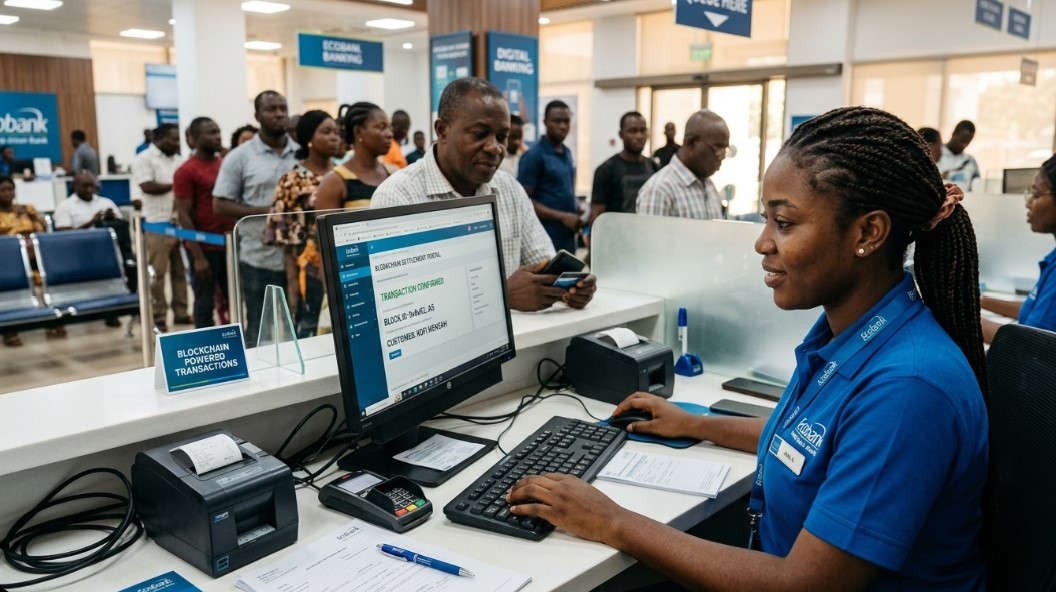
Banking has changed dramatically over the past few decades. Customers can open accounts online, transfer money from their phones, and access financial services without visiting a branch. Behind many of these digital services, however, banks still rely on systems that were built years ago. Many transactions pass through multiple databases, clearing houses, and intermediaries before they are completed.
These legacy systems have served the banking industry well, but they also create challenges. International transfers can take several days to settle. Reconciling records between institutions requires significant time and resources. Fraud continues to evolve, while regulatory requirements become more demanding every year.
Blockchain is helping banks address many of these challenges. Instead of replacing banks, it provides a more efficient way to record, verify, and share financial information. By creating a trusted and transparent record of transactions, blockchain reduces delays, improves accuracy, and lowers operating costs.
Some of the world’s largest financial institutions have already integrated blockchain into payment networks, trade finance, securities settlement, and digital identity programmes. Others are running pilot projects to explore new ways of delivering financial services.
For banks in Kenya and across Africa, blockchain offers an opportunity to modernise operations while expanding financial inclusion. Institutions that adopt the technology strategically can improve efficiency, strengthen customer trust, and prepare for a more connected financial system.
In this guide, you’ll learn how blockchain is transforming modern banking, where it is already delivering value, and why it is expected to become an important part of the banking industry’s future.
Why Banks Need Blockchain
Banks process millions of transactions every day.
Every payment, loan, deposit, investment, and account update generates data that must be recorded accurately. Although customers often experience banking as a seamless digital service, many processes still involve multiple systems communicating behind the scenes.
This complexity increases costs and slows operations.
Blockchain addresses many of these long-standing challenges by creating a secure, shared source of truth that authorised participants can trust.
Legacy Banking Systems
Many banks operate on core banking systems developed years or even decades ago.
Over time, new digital services have been added on top of these platforms. While this approach allows banks to introduce online banking, mobile apps, and payment services, it also creates fragmented technology environments.
Different departments often maintain separate databases for:
- Customer records
- Payments
- Loans
- Treasury operations
- Trade finance
- Compliance
Synchronising these systems requires continuous reconciliation, increasing both operational complexity and cost.
Blockchain offers a shared ledger where authorised parties access the same verified information, reducing duplication and improving consistency.
Slow Cross-Border Payments
Sending money across borders remains one of banking’s biggest challenges.
A single international payment may pass through several correspondent banks before reaching the recipient. Each institution verifies the transaction independently, adding both time and cost.
As a result:
- Settlements may take several days.
- Transaction fees increase.
- Customers have limited visibility into payment status.
- Exchange rate risks grow while payments remain in transit.
Blockchain networks enable participating financial institutions to exchange verified transaction data much more efficiently, reducing settlement times from days to minutes in some cases.
High Reconciliation Costs
Banks spend enormous resources ensuring that financial records match across different systems.
At the end of each business day, institutions reconcile:
- Customer balances.
- Payment records.
- Securities transactions.
- Treasury operations.
- Interbank settlements.
Any discrepancy requires investigation before accounts can be finalised.
Because blockchain records are shared and synchronised across authorised participants, much of this reconciliation work can be automated, reducing errors and operating costs.
Fraud and Financial Crime
Financial fraud continues to become more sophisticated.
Banks face threats including:
- Identity theft.
- Payment fraud.
- Document forgery.
- Money laundering.
- Insider manipulation.
- Cybercrime.
Traditional fraud detection often occurs after suspicious activity has already taken place.
Blockchain strengthens transaction integrity by creating records that cannot be altered without network consensus. Combined with modern analytics and artificial intelligence, this gives banks stronger tools for detecting unusual activity much earlier.
Increasing Regulatory Requirements
Regulators expect banks to maintain detailed, accurate, and auditable records.
Institutions must comply with requirements related to:
- Know Your Customer (KYC).
- Anti-Money Laundering (AML).
- Risk management.
- Transaction monitoring.
- Financial reporting.
- Data governance.
Meeting these obligations requires significant administrative effort.
Blockchain creates permanent transaction histories that improve transparency while simplifying audits and compliance reporting.
Growing Customer Expectations
Modern customers expect banking to be fast, convenient, and always available.
They compare banking experiences with other digital services where transactions happen almost instantly.
Customers increasingly expect:
- Real-time payments.
- Faster international transfers.
- Greater transparency.
- Better security.
- Lower transaction costs.
- Seamless digital experiences.
Banks that fail to modernise risk losing customers to more agile financial technology companies.
Blockchain helps banks deliver many of these improvements without compromising security or regulatory compliance.
Preparing for the Digital Economy
The financial sector is becoming more connected every year.
How Blockchain Works in Banking
Banks handle some of the world’s most sensitive financial information.
Every payment, loan, deposit, and investment must be recorded accurately, protected from tampering, and made available to authorised users when needed. Blockchain strengthens this process by creating a shared digital ledger that trusted participants can access while maintaining strict security and governance.
Unlike public cryptocurrencies, banks generally use permissioned blockchain networks. Only approved institutions can participate, validate transactions, and access information based on predefined roles.
Permissioned Blockchains
Most commercial banks do not use public blockchains for their core operations.
Instead, they deploy permissioned networks where every participant is known and verified.
Participants may include:
- Commercial banks.
- Central banks.
- Payment providers.
- Clearing houses.
- Financial regulators.
- Approved technology partners.
This model provides many of blockchain’s advantages while meeting banking requirements for privacy, compliance, and operational control.
A Shared Source of Truth
Traditional banking systems often require multiple institutions to maintain separate copies of the same transaction.
Each organisation updates its own records and later compares them with those of other parties.
This creates delays and increases reconciliation work.
A blockchain ledger changes this process.
Once a transaction is verified, every authorised participant sees the same version of the record. This reduces duplicate record-keeping and helps ensure that everyone is working with consistent information.
Transaction Validation
Every transaction must be verified before it becomes part of the ledger.
The validation process confirms that:
- The transaction is legitimate.
- The sender has the required authority.
- The data is complete.
- The transaction follows network rules.
- It has not already been processed.
Only after these checks are completed is the transaction permanently recorded.
This improves confidence in the accuracy of financial records.
Immutable Records
One of blockchain’s defining features is immutability.
Once a transaction has been confirmed and added to the ledger, it cannot simply be deleted or secretly altered.
If corrections are required, they are made by recording a new transaction rather than changing historical data.
For banks, this creates a transparent audit trail that supports:
- Internal controls.
- Financial reporting.
- Regulatory compliance.
- Fraud investigations.
- Risk management.
Every authorised participant can trace the complete history of a transaction whenever necessary.
Smart Contracts
Banks increasingly use smart contracts to automate routine financial processes.
A smart contract is a digital agreement that executes predefined actions automatically once agreed conditions have been met.
Instead of relying on manual approvals for every step, the system performs the transaction according to programmed rules.
Examples include:
- Releasing loan funds after all approval conditions are satisfied.
- Executing trade finance payments once shipping documents are verified.
- Settling securities automatically after ownership changes.
- Triggering insurance payments when agreed conditions are met.
Automation reduces paperwork, shortens processing times, and lowers operational costs.
Tokenisation
Blockchain also allows banks to represent real-world assets as secure digital tokens.
This process is known as tokenisation.
Assets that may be tokenised include:
- Government bonds.
- Corporate bonds.
- Real estate.
- Investment funds.
- Commodities.
- Securities.
Tokenisation can simplify ownership transfers, improve liquidity, and create new investment opportunities while maintaining clear ownership records.
Many banks are actively exploring tokenised financial products as regulations continue to evolve.
Real-Time Settlement
Traditional banking often separates transaction execution from settlement.
A payment may be initiated immediately, but the actual movement of funds can take hours or days.
Blockchain reduces this delay by allowing verified transactions to be settled much faster.
For banks, faster settlement means:
- Improved cash flow.
- Reduced counterparty risk.
- Better liquidity management.
- Lower operational costs.
- Faster customer service.
This is particularly valuable for cross-border payments and interbank transfers.
Security Through Cryptography
Banks depend on strong security to protect customer assets and financial data.
Blockchain strengthens security through advanced cryptographic techniques that protect transaction integrity.
Rather than relying on a single central database, information is secured across participating nodes within the network.
This architecture makes unauthorised manipulation significantly more difficult while maintaining high levels of resilience.
It is important to note that blockchain does not replace cybersecurity. Banks still require robust identity management, network security, and fraud prevention systems alongside blockchain technology.
Integration with Existing Banking Systems
Blockchain is not designed to replace every banking system overnight.
Most banks integrate blockchain alongside their existing infrastructure.
For example:
- Core banking systems continue managing customer accounts.
- Mobile banking applications remain unchanged.
- Online banking platforms continue serving customers.
- Blockchain manages selected transaction workflows behind the scenes.
This gradual approach allows institutions to modernise operations without disrupting customer services.
Why Banks Prefer Private Networks
Public blockchain networks are designed for open participation.
Banking operates under very different requirements.
Financial institutions must protect customer confidentiality, comply with regulations, and control who can access sensitive information.
Private blockchain networks allow banks to:
- Verify every participant.
- Restrict data access.
- Meet regulatory requirements.
- Protect customer privacy.
- Maintain operational control.
- Scale networks according to business needs.
This balance between transparency and confidentiality makes permissioned blockchain the preferred choice for enterprise banking.
A Simple Example
Imagine three banks processing an international business payment.
In a traditional system, each bank records the transaction separately and later reconciles its records with the others. This process can involve several intermediaries and take days to complete.
With a permissioned blockchain network, all participating banks validate the transaction together and update the same shared ledger. Every institution immediately sees the confirmed record, reducing manual reconciliation and accelerating settlement.
The customer experiences a faster payment, while the participating banks reduce administrative work and improve operational efficiency.
Table: Traditional Banking vs Blockchain-Based Banking
| Feature | Traditional Banking | Blockchain-Based Banking |
|---|---|---|
| Record Keeping | Separate databases | Shared ledger |
| Settlement Speed | Hours to several days | Minutes to near real time* |
| Reconciliation | Extensive manual processes | Greatly reduced |
| Transparency | Limited between institutions | Shared among authorised participants |
| Audit Trail | Multiple records | Single verified transaction history |
| Smart Contracts | Limited automation | Built-in automation capabilities |
| Security | Centralised controls | Distributed cryptographic verification |
*Actual settlement times depend on the network design, participating institutions, and applicable regulations.
Key Takeaway
Banks use blockchain to create trusted, shared records that improve speed, accuracy, and transparency across financial operations. By combining permissioned networks, smart contracts, cryptographic security, and automated workflows, blockchain helps modernise banking without replacing the core role that financial institutions play in the economy.
Real-World Applications of Blockchain in Banking
Blockchain delivers the greatest value when it solves real business problems.
Banks are not adopting the technology because it is new. They are investing in it because it improves efficiency, reduces costs, strengthens security, and simplifies complex financial processes.
Many of these applications are already operating today, while others are moving from pilot projects into mainstream banking.
Cross-Border Payments
International payments have traditionally been one of banking’s slowest services.
A single transaction may pass through several correspondent banks before reaching its destination. Each institution verifies the payment independently, creating delays, additional fees, and limited visibility for both the sender and the recipient.
Blockchain simplifies this process.
Instead of relying on multiple intermediaries, participating banks can share verified transaction information through a common network.
The benefits include:
- Faster settlement.
- Lower transaction costs.
- Improved payment tracking.
- Fewer reconciliation errors.
- Greater transparency.
For businesses involved in international trade, faster payments improve cash flow and reduce uncertainty.
Interbank Settlements
Banks exchange funds with one another every day.
These settlements support:
- Customer transfers.
- Card payments.
- Securities trading.
- Treasury operations.
- Liquidity management.
Traditional settlement processes often require reconciliation between multiple systems before funds are finalised.
Blockchain allows participating institutions to update a shared ledger in near real time, reducing delays and improving operational efficiency.
This also lowers settlement risk because transactions are confirmed more quickly.
Trade Finance
Trade finance remains one of the most document-intensive areas of banking.
A single international shipment may involve:
- Banks.
- Importers.
- Exporters.
- Shipping companies.
- Customs authorities.
- Insurance providers.
Each party maintains separate records, making verification slow and expensive.
Blockchain creates a shared record of key trade documents that authorised participants can access securely.
Smart contracts can automatically trigger payments once agreed milestones have been met, such as confirming that goods have been shipped or received.
This reduces paperwork, shortens processing times, and lowers the risk of document fraud.
Digital Identity and Know Your Customer (KYC)
Banks are required to verify every customer’s identity before opening an account.
This process protects the financial system from fraud, money laundering, and identity theft.
Traditional KYC processes often involve collecting the same documents repeatedly whenever customers open accounts with different financial institutions.
Blockchain offers a more efficient approach.
Verified identity information can be securely shared between authorised institutions with customer consent, reducing duplication while maintaining strong privacy controls.
Benefits include:
- Faster account opening.
- Lower compliance costs.
- Reduced identity fraud.
- Better customer experience.
- Improved data accuracy.
Anti-Money Laundering (AML)
Banks invest heavily in systems that monitor suspicious financial activity.
Blockchain strengthens these efforts by creating transparent transaction histories that are difficult to manipulate.
Combined with artificial intelligence and advanced analytics, blockchain helps banks:
- Monitor unusual transaction patterns.
- Improve audit trails.
- Detect suspicious behaviour earlier.
- Support regulatory reporting.
- Strengthen financial crime investigations.
It does not eliminate money laundering on its own, but it provides more reliable data for compliance teams.
Loan Processing
Loan approval involves verifying information from multiple sources.
Banks typically assess:
- Customer identity.
- Credit history.
- Income.
- Collateral.
- Existing liabilities.
- Regulatory requirements.
Many of these steps remain manual.
Blockchain can automate parts of the process by securely sharing verified information between authorised participants and executing predefined approval workflows using smart contracts.
This reduces paperwork and speeds up lending decisions.
Syndicated Lending
Large infrastructure projects often require loans from multiple banks.
Managing these arrangements involves extensive documentation and ongoing coordination between lenders.
Blockchain allows participating institutions to access a shared record of the loan throughout its lifecycle.
This improves:
- Transparency.
- Payment tracking.
- Interest calculations.
- Reporting.
- Contract management.
The result is a more efficient lending process for both banks and borrowers.
Securities Settlement
Banks play an important role in capital markets.
They facilitate the buying, selling, and settlement of financial assets such as shares and bonds.
Traditional settlement systems often require two or more business days before ownership is fully transferred.
Blockchain can reduce settlement times by synchronising transaction verification and ownership records.
Faster settlement lowers operational costs and reduces counterparty risk.
Asset Tokenisation
Banks are increasingly exploring the tokenisation of financial assets.
Tokenisation converts ownership rights into secure digital tokens recorded on a blockchain.
Assets that may be tokenised include:
- Government bonds.
- Corporate bonds.
- Investment funds.
- Real estate.
- Commodities.
- Private equity.
Tokenised assets can improve liquidity, simplify transfers, and make investment opportunities more accessible.
Many financial institutions view tokenisation as one of blockchain’s most significant long-term applications.
Central Bank Digital Currencies (CBDCs)
Many central banks are evaluating digital versions of national currencies.
Known as Central Bank Digital Currencies (CBDCs), these currencies combine the stability of government-issued money with modern digital payment infrastructure.
Commercial banks are expected to play a central role in distributing and managing CBDCs.
Blockchain provides one possible foundation for these systems by enabling secure transaction records and efficient settlement between financial institutions.
As more countries explore CBDCs, banks are preparing their systems to support future integration.
Fraud Prevention
Fraud remains one of banking’s biggest operational risks.
Blockchain helps reduce fraud by creating records that cannot easily be altered after they have been verified.
Additional benefits include:
- Stronger audit trails.
- Better transaction visibility.
- Reduced document forgery.
- Improved payment verification.
- Greater accountability.
Although no technology can eliminate fraud completely, blockchain significantly strengthens the integrity of financial records.
Customer Experience
Customers rarely see the blockchain itself.
Instead, they experience the benefits through better banking services.
These improvements include:
- Faster transfers.
- Shorter processing times.
- Greater payment transparency.
- More secure digital services.
- Improved access to financial products.
As blockchain becomes integrated into banking infrastructure, many customers may never realise it is working behind the scenes.
Table: Blockchain Applications in Banking
| Application | Primary Benefit |
|---|---|
| Cross-border payments | Faster international transfers |
| Interbank settlement | Reduced settlement time |
| Trade finance | Less paperwork and faster processing |
| Digital identity (KYC) | Faster customer onboarding |
| AML compliance | Improved monitoring and audit trails |
| Loan processing | Automated verification and approvals |
| Syndicated lending | Better coordination between lenders |
| Securities settlement | Faster ownership transfers |
| Asset tokenisation | Increased liquidity and investment access |
| CBDCs | Modern digital payment infrastructure |
| Fraud prevention | Stronger transaction integrity |
Key Takeaway
Blockchain is already transforming many of the services banks provide every day. From international payments and trade finance to digital identity and securities settlement, the technology reduces delays, improves transparency, and strengthens operational efficiency. Rather than replacing banks, blockchain is becoming part of the infrastructure that supports a faster, more secure, and more connected financial system.
Benefits of Blockchain in Banking
Banks invest in technology to solve real business problems.
Every improvement is measured by its impact on efficiency, security, customer experience, and long-term profitability. Blockchain has gained attention because it addresses several challenges at the same time while supporting the future of digital banking.
Although implementation requires careful planning, the potential benefits extend across nearly every banking operation.
Faster Transaction Processing
Speed is one of blockchain’s biggest advantages.
Traditional banking transactions often move through several systems before they are completed. Each stage introduces additional processing time, especially when multiple institutions are involved.
Blockchain streamlines this process by allowing authorised participants to verify and record transactions on a shared ledger.
For customers, this means:
- Faster transfers.
- Shorter waiting times.
- Improved payment tracking.
- Better access to funds.
For banks, it means greater operational efficiency and improved liquidity management.
Lower Operating Costs
Banks spend significant resources on administration.
Reconciling accounts, processing paperwork, verifying records, and managing intermediaries all increase operating expenses.
Blockchain reduces these costs by creating a shared record that all authorised participants can trust.
Automation through smart contracts also reduces repetitive manual tasks, allowing employees to focus on higher-value work.
Over time, these efficiencies can generate substantial cost savings.
Improved Transparency
Transparency builds trust.
Every verified blockchain transaction creates a permanent record that authorised participants can access when required.
Instead of searching through multiple databases, banks can trace transactions through a single, verified history.
This improves:
- Internal reporting.
- Regulatory compliance.
- Audit preparation.
- Dispute resolution.
- Operational visibility.
Greater transparency also strengthens confidence between financial institutions that share the same network.
Stronger Security
Banks manage highly sensitive financial information.
Protecting customer data remains one of their highest priorities.
Blockchain enhances security through:
- Cryptographic verification.
- Tamper-resistant records.
- Distributed data storage.
- Controlled network access.
- Complete transaction histories.
It is important to understand that blockchain strengthens security rather than replacing cybersecurity.
Banks still require firewalls, encryption, identity management, fraud detection systems, and continuous monitoring to protect their infrastructure.
Reduced Fraud
Fraud prevention remains a constant challenge across the banking sector.
Altering transaction records, forging documents, and manipulating payment information become much more difficult when verified records cannot easily be changed.
Blockchain supports fraud prevention by providing:
- Reliable audit trails.
- Greater accountability.
- Better transaction verification.
- Improved record integrity.
Combined with artificial intelligence, banks can identify suspicious activity more quickly and respond before losses escalate.
Better Customer Experience
Customers expect banking services to be simple and reliable.
They want payments to arrive quickly, loan applications to be processed efficiently, and account information to remain accurate.
Blockchain supports these expectations by reducing delays behind the scenes.
Customers benefit from:
- Faster onboarding.
- Quicker payments.
- Greater transaction visibility.
- Improved service reliability.
- Better digital banking experiences.
In many cases, customers will experience these improvements without knowing blockchain is involved.
Improved Compliance
Banks operate within one of the world’s most regulated industries.
Compliance teams spend considerable time preparing reports, verifying records, and responding to regulatory reviews.
Blockchain simplifies many of these activities by maintaining accurate and traceable transaction histories.
This helps institutions demonstrate compliance with greater confidence while reducing administrative effort.
Greater Financial Inclusion
Blockchain can also help banks reach customers who have traditionally been underserved.
Digital identity systems, lower transaction costs, and faster payment infrastructure make financial services more accessible in remote areas.
In countries such as Kenya, where mobile banking is already well established, blockchain can strengthen existing digital financial ecosystems rather than replacing them.
This creates new opportunities for individuals, businesses, and community organisations to participate in the formal economy.
Challenges of Blockchain in Banking
Despite its advantages, blockchain is not a complete solution to every banking challenge.
Successful implementation requires investment, planning, and collaboration between banks, regulators, and technology providers.
Understanding these challenges helps institutions make informed decisions.
Regulatory Uncertainty
Financial regulation continues to evolve.
Many countries are still developing policies covering digital assets, blockchain infrastructure, and tokenised financial products.
Banks must ensure that any blockchain solution complies with local laws, international standards, and regulatory expectations.
Close collaboration with regulators remains essential.
Integration with Legacy Systems
Most banks cannot replace their existing technology overnight.
Core banking platforms, payment systems, and customer databases often remain central to daily operations.
Blockchain must therefore integrate with existing infrastructure rather than operate independently.
This integration requires careful planning, technical expertise, and significant investment.
Scalability
Large commercial banks process enormous transaction volumes every second.
Blockchain platforms must maintain high performance while supporting growing customer demand.
Modern enterprise blockchain networks continue to improve scalability, but performance remains an important consideration during system design.
Banks evaluate scalability alongside security, reliability, and operational costs before selecting a platform.
Privacy and Data Protection
Financial institutions manage confidential customer information.
Although blockchain improves transparency, banks must also comply with strict privacy regulations.
Permissioned blockchain networks address this challenge by controlling:
- Who can access data.
- What information each participant can view.
- How customer information is protected.
- How records are shared between institutions.
Balancing transparency with privacy remains one of the most important design considerations.
Skills and Expertise
Blockchain combines finance, software engineering, cybersecurity, and regulatory compliance.
Finding professionals with expertise across all these areas remains challenging.
Many banks continue investing in:
- Staff training.
- Technology partnerships.
- Research programmes.
- Pilot projects.
- Innovation teams.
Building internal knowledge is just as important as investing in new technology.
Initial Investment
Implementing blockchain requires significant upfront investment.
Costs may include:
- Technology infrastructure.
- System integration.
- Staff training.
- Cybersecurity.
- Compliance.
- Ongoing maintenance.
Although long-term savings may outweigh these costs, financial institutions must carefully evaluate expected returns before deployment.
Lessons for Kenyan Banks
Kenya already has one of Africa’s most advanced digital banking ecosystems.
Mobile money, agency banking, and digital lending have transformed how millions of people access financial services.
Blockchain represents the next stage of this evolution rather than a replacement for existing innovations.
For Kenyan banks, the greatest opportunities include:
- Faster cross-border payments.
- Improved trade finance.
- Stronger fraud prevention.
- Better digital identity management.
- More efficient compliance.
- Support for future digital asset infrastructure.
Institutions that begin exploring blockchain today will be better prepared for tomorrow’s financial landscape.
Table: Benefits vs Challenges
| Benefits | Challenges |
|---|---|
| Faster settlements | Regulatory uncertainty |
| Lower operating costs | Legacy system integration |
| Better transparency | Initial investment |
| Improved security | Skills shortage |
| Reduced fraud | Scalability requirements |
| Better compliance | Privacy management |
| Enhanced customer experience | Technology adoption |
Real-World Examples
Several of the world’s leading banks have already moved beyond experimentation and deployed blockchain in production environments.
JPMorgan developed Kinexys (formerly Onyx), a blockchain-based platform that supports wholesale payments and tokenised assets. It demonstrates how distributed ledger technology can streamline institutional banking operations.
HSBC has used blockchain in trade finance to reduce paperwork and improve transaction efficiency for international trade.
Santander was among the first major banks to launch blockchain-enabled international payment services, allowing customers to send money across borders more quickly.
DBS Bank in Singapore has built digital asset and tokenisation services that support institutional clients while expanding blockchain applications within traditional banking.
Standard Chartered continues to explore blockchain for trade finance, cross-border payments, and digital asset infrastructure across multiple markets.
These examples show a consistent trend. Leading banks are not replacing traditional banking with blockchain. They are integrating blockchain into specific services where it delivers measurable business value.
Key Takeaway
Blockchain offers banks practical benefits that extend far beyond faster payments. It reduces operating costs, strengthens security, improves compliance, and creates new opportunities for innovation. While challenges such as regulation, integration, and investment remain, successful implementations around the world demonstrate that blockchain is becoming an important part of modern banking infrastructure rather than a passing technology trend.
The Future of Blockchain in Banking
Banking has always evolved alongside technology.
From paper ledgers to computers, from ATMs to mobile banking, every major innovation has changed how financial institutions operate and how customers manage their money. Blockchain is part of the next stage of that evolution.
It will not replace banks. Instead, it will provide the infrastructure that helps banks become faster, more efficient, and more connected.
The banks that invest in blockchain today are preparing for a future where financial services move instantly, data is shared securely, and many routine processes happen automatically.
Blockchain and Artificial Intelligence
Blockchain and artificial intelligence are often discussed together because they solve different parts of the same problem.
Blockchain creates trusted, tamper-resistant data. Artificial intelligence analyses that data to identify patterns, predict risks, and support decision-making.
Together, they can help banks:
- Detect fraud earlier.
- Improve credit assessments.
- Automate compliance checks.
- Personalise customer services.
- Strengthen cybersecurity.
- Improve operational efficiency.
As both technologies mature, banks will increasingly combine them to deliver smarter financial services.
The Rise of Tokenised Finance
Financial assets are becoming digital.
Governments, financial institutions, and investment firms are exploring ways to represent traditional assets on blockchain networks.
These assets include:
- Government securities.
- Corporate bonds.
- Investment funds.
- Real estate.
- Commodities.
- Private market investments.
Tokenisation can make buying, selling, and transferring assets more efficient while improving transparency and reducing administrative costs.
For banks, this opens new opportunities to create innovative financial products and expand investment services.
Central Bank Digital Currencies (CBDCs)
Many central banks are exploring digital versions of their national currencies.
Unlike cryptocurrencies, CBDCs are issued and backed by a country’s central bank.
Commercial banks are expected to remain at the centre of these systems by:
- Distributing digital currency.
- Managing customer accounts.
- Supporting payment infrastructure.
- Providing financial services built around digital money.
Rather than replacing commercial banks, CBDCs are likely to strengthen the relationship between central banks and the banking sector.
Open Banking and Blockchain
Open banking allows customers to securely share financial information with authorised service providers.
This creates opportunities for innovation while giving customers greater control over their financial data.
Blockchain complements open banking by:
- Improving data integrity.
- Strengthening identity verification.
- Increasing transaction transparency.
- Supporting secure information sharing.
- Reducing fraud.
Together, these technologies can create a more connected financial ecosystem without compromising customer privacy.
Smarter Compliance
Compliance will continue to grow in importance.
Banks face increasing expectations from regulators regarding transparency, reporting, and financial crime prevention.
Blockchain can automate many compliance processes by maintaining accurate, traceable, and verifiable records.
Instead of spending time reconciling historical data, compliance teams can focus on identifying risks and improving governance.
This shift reduces administrative work while strengthening regulatory oversight.
Financial Inclusion
Millions of people around the world still have limited access to formal banking services.
Digital infrastructure is helping close this gap.
Blockchain can support financial inclusion by reducing transaction costs, improving digital identity systems, and making financial services easier to deliver in underserved communities.
In Kenya, where digital payments and mobile banking are already part of everyday life, blockchain has the potential to strengthen existing systems rather than replace them.
It can help banks serve more customers while improving efficiency behind the scenes.
What This Means for Banks
Blockchain is no longer an experimental technology.
Many financial institutions have already demonstrated that it can improve payments, trade finance, securities settlement, and compliance.
The next phase will focus on expanding these solutions across more banking services while integrating them with artificial intelligence, digital identity, and emerging payment technologies.
Banks that adopt blockchain strategically will be better positioned to compete in an increasingly digital financial environment.
Frequently Asked Questions
Can blockchain replace banks?
No. Blockchain is designed to improve banking infrastructure, not replace financial institutions. Banks continue to provide lending, financial advice, risk management, compliance, and customer services.
Why are banks using blockchain?
Banks use blockchain to improve transaction speed, reduce operating costs, strengthen security, automate processes, and improve transparency.
Which banking services use blockchain?
Current applications include cross-border payments, trade finance, digital identity, loan processing, securities settlement, asset tokenisation, and compliance reporting.
Is blockchain secure for banks?
Yes. Blockchain provides strong protection against unauthorised changes to transaction records. However, banks still require comprehensive cybersecurity systems to protect networks, customer accounts, and digital services.
Can blockchain reduce banking fraud?
It helps reduce fraud by creating transparent and tamper-resistant transaction records. Combined with fraud detection systems and artificial intelligence, it strengthens financial crime prevention.
Are banks replacing SWIFT with blockchain?
Some banks are exploring blockchain-based payment networks for certain use cases, particularly cross-border payments. However, blockchain currently complements existing payment infrastructure rather than replacing it entirely.
What is a permissioned blockchain?
A permissioned blockchain is a private network where only approved organisations can participate, validate transactions, and access sensitive information.
How does blockchain improve cross-border payments?
It reduces the number of intermediaries involved, speeds up settlement, improves payment visibility, and lowers reconciliation costs.
Are Kenyan banks using blockchain?
Several Kenyan financial institutions are actively exploring blockchain through research, pilot programmes, partnerships, and digital innovation initiatives. Adoption is expected to increase as regulations and commercial use cases continue to mature.
What is the future of blockchain in banking?
Blockchain is expected to support faster payments, tokenised financial assets, Central Bank Digital Currencies, smarter compliance, stronger digital identity systems, and closer integration with artificial intelligence.
Conclusion
Banking is entering a new phase of digital transformation.
Customers expect faster services, greater transparency, and stronger security than ever before. At the same time, banks are under pressure to reduce costs, strengthen compliance, and modernise ageing infrastructure.
Blockchain offers a practical way to meet these demands. By improving how financial information is recorded, shared, and verified, it helps banks streamline operations without changing the essential role they play in the economy.
The technology is already proving its value in areas such as cross-border payments, trade finance, digital identity, securities settlement, and fraud prevention. As artificial intelligence, tokenisation, and Central Bank Digital Currencies continue to evolve, blockchain will become an even more important part of modern banking infrastructure.
For banks in Kenya and around the world, the opportunity is clear. Those that invest in blockchain with a clear business strategy will be better prepared to deliver secure, efficient, and customer-focused financial services in the years ahead.
For this kind of news, articles, tutorials and more, visit us at MUIAA Ltd where we offer research, advice and build modern day innovations in blockchain, fintech, and digital finance across emerging markets. We help turn ground-level realities into practical financial tools.