

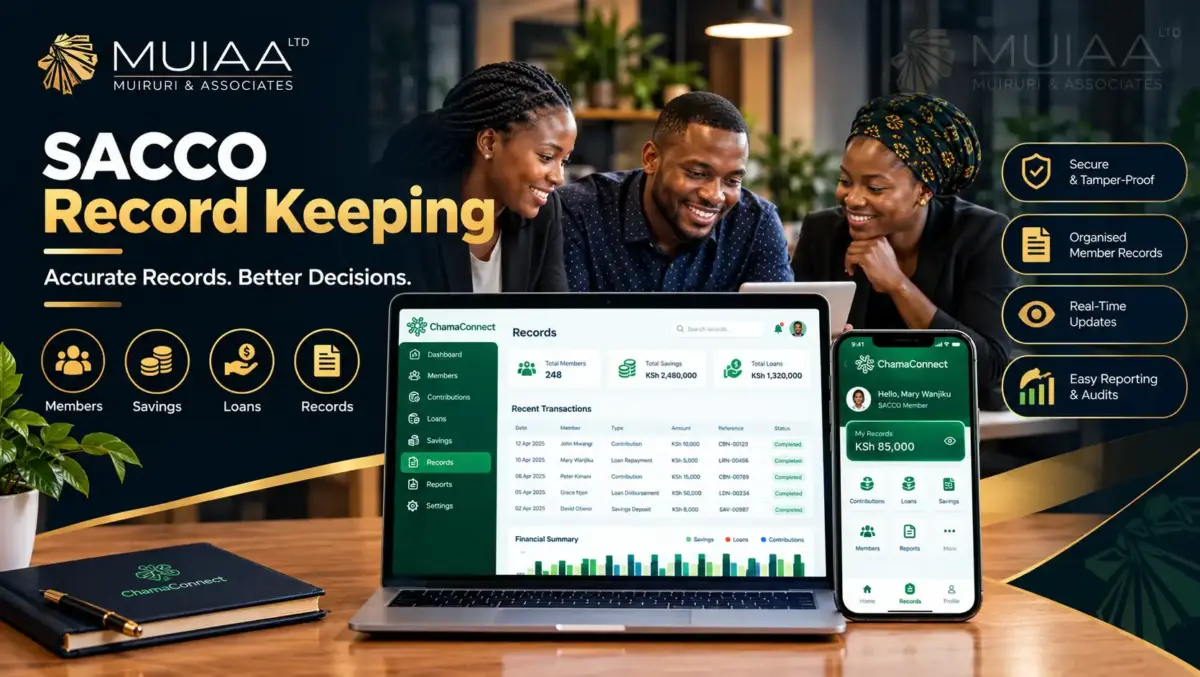
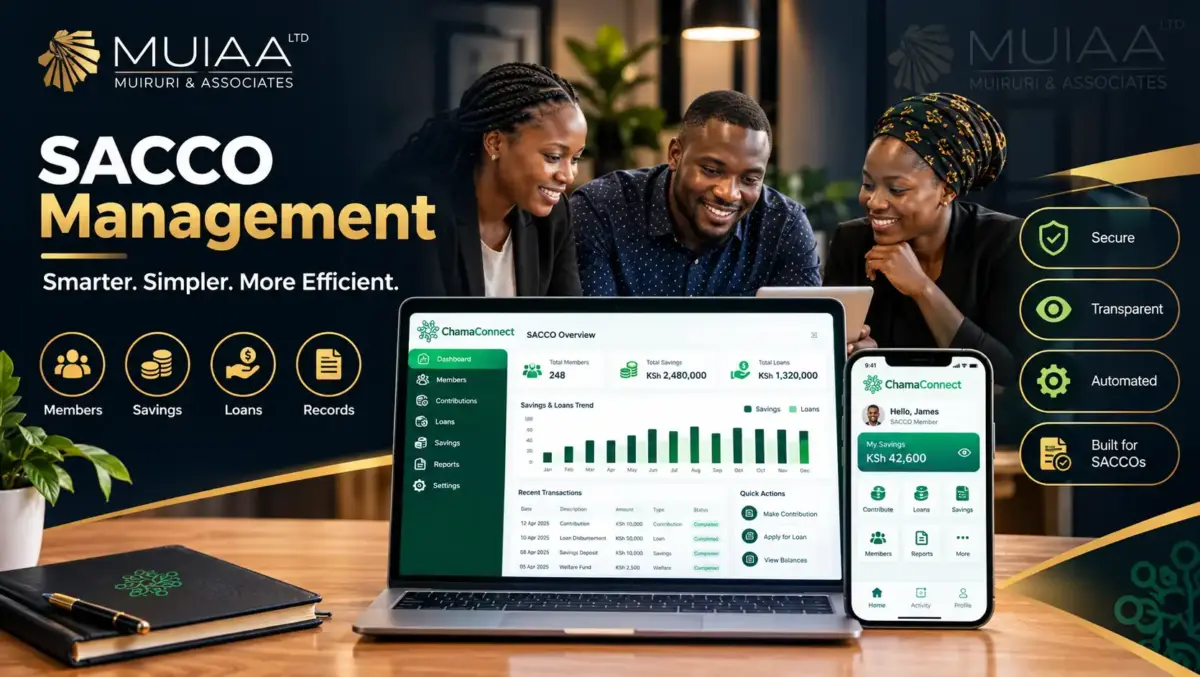


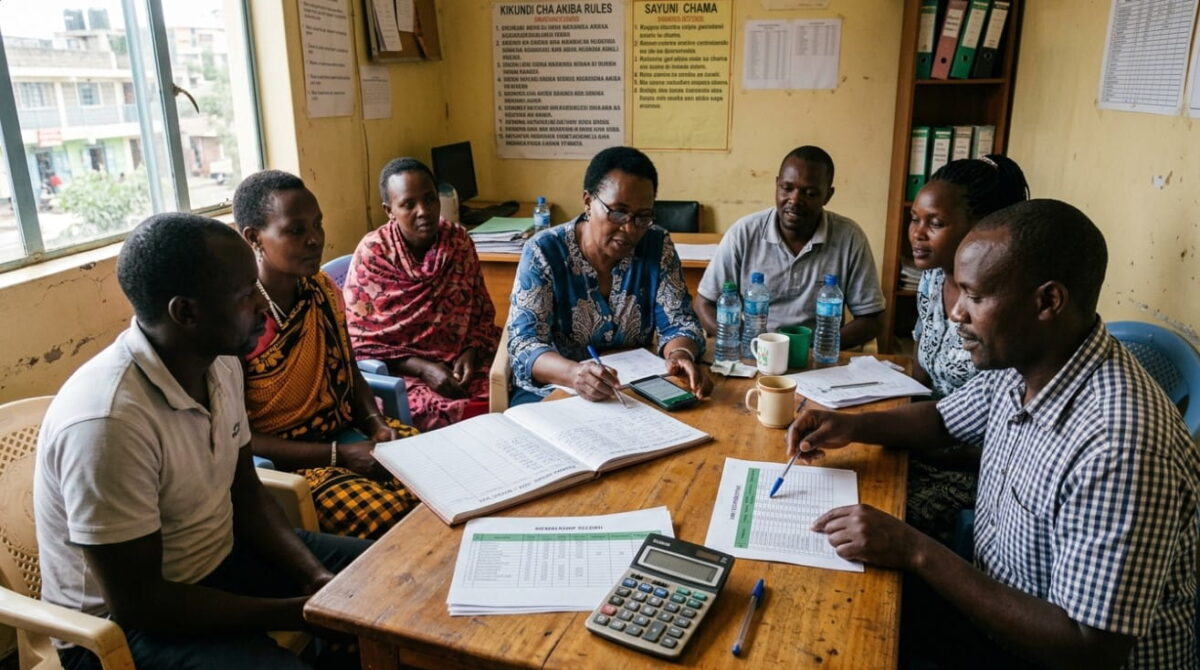

A SACCO can collect members’ savings every month and still struggle to explain how much each member has contributed, which loans remain unpaid, or why the cash balance does not match the financial report. These problems often begin with poor record keeping.
SACCO record keeping in Kenya involves documenting membership, savings, shares, loans, repayments, expenses, approvals and other activities that affect the society. Good records help SACCO leaders track money, answer members’ questions, prepare reports and identify errors before they become larger problems.
For SACCOs moving from notebooks and spreadsheets to digital systems, the goal is straightforward: every important transaction should have a clear record, and authorised people should be able to trace what happened.
1. What Is SACCO Record Keeping?
SACCO record keeping is the process of creating, organising, updating and protecting records of a savings and credit cooperative’s activities.
These records cover more than money received and paid out. They also show who belongs to the SACCO, how decisions are made, which loans have been approved, what members owe, and whether the society is following its policies.
For example, when a member deposits KSh 5,000 into their savings account, the SACCO should record the amount, date, member account, payment reference and transaction status. The entry should also be reflected in the relevant account and financial reports.
If the member later applies for a loan, the SACCO needs reliable savings and loan records to assess the application and track repayment.
Record keeping connects these activities. Without it, different departments or officials may end up working with conflicting figures.
2. Why Is Proper SACCO Record Keeping Important?
Accurate records support daily operations and long-term accountability.
They protect member trust. Members need to know how much they have saved, what they owe and how their money has been handled. Clear records make it easier to explain these figures.
They improve financial control. Comparing transaction records, cash balances, bank statements and payment confirmations can help identify missing entries, duplicate transactions and unexplained differences.
They support loan management. A SACCO needs current information about loan balances, repayments, arrears and guarantor commitments to manage lending responsibly.
They make reporting easier. Financial statements and management reports depend on reliable underlying records. When information is scattered across notebooks and spreadsheets, preparing these reports takes longer.
They support audits and inspections. Proper documentation helps authorised reviewers trace transactions and assess whether records support the reported financial position.
They preserve institutional knowledge. Office bearers and staff can change. A well-maintained record system allows the SACCO to continue operating without depending on one person’s memory or personal files.
3. What Records Should a SACCO Keep?
The exact records required depend on the SACCO’s legal structure, activities, applicable laws and by-laws. The following categories provide a practical starting point.
3a. Membership Records
A SACCO needs an up-to-date register of its members.
Member records commonly include:
- Full name and member number
- Contact details
- Date of admission
- Membership status
- Relevant identification and verification information
- Nominee details, where applicable
- Member shareholding, savings and loan account references
The SACCO should also document changes to membership, including withdrawals, transfers or cessation of membership where applicable.
Access to personal information should be restricted to authorised people. A membership register should not become a public file containing sensitive financial and personal details.
3b. Shares, Savings and Deposit Records
These records show the amounts members have contributed or deposited and how their balances change over time.
Depending on the SACCO’s structure, the records may cover:
- Member share capital
- Regular savings contributions
- Deposits
- Voluntary savings products
- Withdrawals and transfers
- Interest or dividends where applicable
- Opening and closing balances
Shares, savings and deposits should not be treated as interchangeable. Their meaning, withdrawal conditions and accounting treatment can differ.
For each transaction, record the member, amount, date, transaction type, payment reference and resulting balance. Where a payment fails or is reversed, the record should show that outcome rather than treating the original payment as successful.
3c. Loan Records
Loan records help the SACCO track applications, approvals, disbursements and outstanding balances.
A useful loan file may contain:
- Loan application and purpose
- Amount requested and approved
- Applicable interest rate and fees
- Approval decisions
- Loan agreement and supporting documents
- Disbursement details
- Repayment schedule
- Outstanding principal and interest
- Arrears and recovery actions
- Loan restructuring or other approved changes
These records should allow an authorised reviewer to trace a loan from application to final repayment.
A loan marked as approved should not automatically be treated as disbursed. The record should distinguish each stage and show the actual transaction that released the funds.
3d. Loan Guarantor Records
Where a SACCO uses guarantors, it needs records showing who guaranteed a loan and the obligations attached to that guarantee.
These may include guarantor details, the amount guaranteed, consent and approval records, changes to the guarantee, and any release of the obligation.
The SACCO should also track the relationship between the guarantee and the loan balance. If a member guarantees loans for several borrowers, the system should make those commitments visible to authorised officers.
Accurate records help prevent disputes over whether a member agreed to guarantee a loan or how much of their eligible savings has already been committed.
3e. Repayment and Arrears Records
Loan repayment records show what borrowers have paid and what remains outstanding.
Each repayment should be linked to the correct loan account and payment reference. The SACCO should record the date, amount received, allocation to principal, interest and applicable charges, as well as the remaining balance.
The records should also show missed instalments, overdue amounts, rescheduled repayments and recovery actions.
This matters because a payment received does not necessarily mean the loan is fully up to date. The amount may cover only part of an instalment or may need to be allocated across several outstanding items.
3f. Cashbooks, Ledgers and Bank Records
These are central to the SACCO’s financial records.
A cashbook records money received and paid out. A general ledger groups transactions into the accounts used to prepare financial statements. Member-level records show the transactions and balances associated with individual accounts.
The SACCO should also retain bank statements, payment confirmations, reconciliation records and supporting documents for significant transactions.
For example, if the SACCO’s records show that KSh 100,000 was received, the corresponding payment or bank evidence should help establish whether the money actually reached the relevant account.
Reconciliation compares the SACCO’s records against independent sources such as bank statements and payment-provider reports. Differences should be investigated, documented and resolved.
3g. Income, Expenses and Asset Records
A SACCO needs records of the money it earns, the costs it incurs and the assets it owns.
These may include operating expenses, staff costs, rent, bank charges, investments, equipment, property and other assets relevant to its operations.
Supporting documents may include invoices, receipts, payment vouchers, contracts and approved expenditure requests.
Each expense should have a clear purpose, appropriate authorisation and evidence of payment. Asset records should help the SACCO identify what it owns, where it is held and how it is accounted for.
3h. Meeting Minutes and Governance Records
Financial decisions often begin with a meeting or an approved policy.
A SACCO should maintain relevant records of board meetings, committee meetings and general meetings. These records document attendance, resolutions, decisions and assigned responsibilities.
Other governance records may include:
- Approved budgets and financial policies
- Credit policies and loan approval procedures
- Delegations of authority
- Conflict-of-interest declarations
- Internal audit findings and follow-up actions
- Risk management decisions
- Relevant complaints and their resolution
These records help establish whether decisions were made by the appropriate people and whether the SACCO followed its own procedures.
3i. Financial Statements and Regulatory Records
Financial statements summarise the SACCO’s financial position and performance. They depend on the accuracy of its underlying books and transaction records.
Depending on the SACCO’s regulatory status, its reporting obligations may include audited financial statements, regulatory returns and other prescribed information.
Kenya’s SACCO Societies Act and regulations provide the legal framework for regulated SACCO business. SASRA also publishes guidance and reporting information for the SACCOs it supervises.
A SACCO should identify which requirements apply to its particular category instead of assuming every SACCO has identical obligations.
4. How Should a SACCO Organise Its Records?
Having all the documents is only part of the job. The records need to be organised so that staff and authorised officials can find, verify and use them.
A practical system should follow these principles.
Use a consistent member identifier. Each member should have a unique number or account reference. This reduces confusion when people have similar names.
Link related transactions. A loan repayment should connect to the borrower, loan account, payment evidence and resulting balance.
Record transactions promptly. Delayed entries make it harder to confirm what happened and increase the risk of omissions.
Retain supporting evidence. Receipts, bank statements, payment references, approval records and contracts should support the relevant entries.
Separate recording from approval. Where practical, the person entering a transaction should not have unrestricted authority to approve and conceal the same transaction.
Review and reconcile regularly. Compare member balances, cashbooks, ledgers, bank records and loan schedules. Investigate differences rather than adjusting figures without an explanation.
Control access. Staff and office bearers should only access the information and functions needed for their responsibilities.
Maintain a record of changes. Corrections should be traceable. A good system records what changed, who made the change, when it happened and why.
5. SACCO Record Keeping Using Notebooks, Excel or Software
SACCOs often begin with paper records and later move to spreadsheets or dedicated software. Each approach has different strengths and limitations.
| Method | Strengths | Common limitations |
|---|---|---|
| Notebooks and paper files | Simple to start and familiar to many users | Difficult to search, reconcile and back up; records can be damaged or misplaced |
| Excel or spreadsheets | Flexible, inexpensive and useful for basic calculations | Multiple versions, formula errors, weak access controls and limited transaction traceability if poorly managed |
| SACCO management software | Can connect member accounts, savings, loans, repayments, approvals and reports | Requires setup, training, reliable data and appropriate security controls |
Software does not automatically make records accurate. Poorly configured systems can still produce incorrect balances.
A SACCO should evaluate whether a system supports its actual operations, protects member data, maintains usable audit records and produces reports that can be checked against source transactions.
6. Common SACCO Record-Keeping Problems
6a. Different Figures in Different Files
The treasurer’s spreadsheet may show one balance while the member register or bank statement shows another. This often happens when entries are updated in one place but not elsewhere.
A more consistent system links related records and includes regular reconciliation.
6b. Missing Payment References
A record may show that a member paid KSh 3,000 without identifying the transaction or retaining supporting evidence. This makes it difficult to investigate a disputed payment.
Recording payment references and keeping the relevant confirmations makes transactions easier to trace.
6c. Unclear Loan Balances
If repayments are not allocated correctly, the SACCO may report the wrong outstanding balance or fail to identify arrears promptly.
Each repayment should be connected to the correct loan and reflected in the balance calculation.
6d. Unrecorded Approvals
An officer may say a loan or expense was approved, but the SACCO may have no reliable record of who authorised it.
Approval records should identify the decision-maker, date, decision and relevant supporting information.
6e. Records That Depend on One Person
When only one treasurer knows how the spreadsheets work, the SACCO faces a continuity risk if that person leaves or becomes unavailable.
Documented procedures, controlled access and shared institutional records make handovers easier.
7. How to Improve SACCO Record Keeping in Kenya
A SACCO does not have to digitise everything at once to improve its records. It can begin with a clear process and build from there.
- Review the existing records. Identify the files, books and systems used for membership, savings, loans, expenses and reporting.
- Resolve outstanding discrepancies. Investigate unexplained balances before moving old information into a new system.
- Standardise the format. Use consistent member numbers, transaction references, dates and account categories.
- Assign responsibilities. Define who records transactions, who approves them and who reviews the results.
- Set a reconciliation schedule. Decide how frequently bank accounts, member balances, loan accounts and financial reports will be checked.
- Create a secure backup process. Protect records against accidental deletion, device failure, theft and unauthorised access.
- Review access permissions. Remove access when roles change and avoid shared accounts that make individual actions difficult to trace.
- Evaluate digital systems. Choose tools that support the SACCO’s size, policies, reporting requirements and member needs.
- Train staff and office bearers. Ensure everyone understands how to enter transactions, correct errors and handle sensitive information.
- Monitor record quality. Review errors, missing documents, unresolved differences and overdue reconciliations regularly.
8. How Digital SACCO Management Systems Help
A digital SACCO management system can bring member records, savings, loan accounts, repayments, approvals and reports into one coordinated workflow.
Instead of relying on separate files, authorised users can work with a shared record of transactions and member activity. Depending on the system, it may also provide payment integrations, automated calculations, reminders, reporting and activity logs.
For instance, a repayment recorded against a member’s loan can update the loan balance and contribute to the SACCO’s financial reporting. Staff can then review the transaction and compare it with the relevant payment evidence.
When evaluating software, look for:
- Member and account management
- Savings and contribution tracking
- Loan applications, approvals and repayment schedules
- Guarantor records where applicable
- Expense and transaction tracking
- Role-based permissions
- Searchable activity and audit logs
- Financial and management reports
- Secure backups and data protection controls
- Export options and support for existing workflows
Ask vendors how the system handles corrections, failed payments, duplicate transactions, staff handovers and data export. These details matter just as much as the feature list.
9. How ChamaConnect Fits Into Digital Financial Record Keeping
MUIAA develops digital tools for financial management in African communities and cooperatives. One of its products, ChamaConnect, supports savings groups with member records, contributions, loans, financial activity and reporting.
Its features can be relevant to groups that need more organised financial records and clearer workflows for office bearers. The platform includes role-based access and activity logging, alongside a blockchain-backed audit trail for relevant activity. Its capabilities and level of blockchain auditability should be checked against the current product documentation.
SACCO leaders should assess whether ChamaConnect’s available features, operating model and reporting meet their specific needs. A chama management platform should not automatically be treated as a replacement for every SACCO’s specialised accounting, regulatory reporting or core banking system.
Explore the ChamaConnect features to understand its current capabilities.
10. What Should a SACCO Check Before Digitising Its Records?
Before adopting a digital system, SACCO leaders should establish what they need the system to do.
Start with the records the SACCO already maintains and identify where errors, delays or duplication occur. Confirm that the proposed software can support the required accounts, transaction types, approval processes and reports.
The SACCO should also decide how existing records will be transferred, who will verify the imported balances and how historical documents will be retained. A migration should not be considered complete until the opening balances and important records have been checked.
Security also deserves attention. Member financial records should be accessible only to authorised people, protected against loss and handled in line with applicable data protection obligations.
Finally, agree on who will maintain the system, how errors will be corrected, and what happens when a staff member or office bearer changes roles.
Frequently Asked Questions
What records should a SACCO keep in Kenya?
A SACCO generally needs membership records, share and savings records, loan and repayment records, cashbooks, ledgers, bank records, expense documentation, meeting minutes and financial statements. Other records may be required depending on its activities, by-laws and regulatory status.
Is Excel enough for SACCO record keeping?
Excel may work for a small SACCO with simple operations and strong controls. However, spreadsheets can become difficult to maintain as member numbers, loans and transaction volumes grow. A SACCO should consider whether its current method supports accurate balances, approvals, reconciliation, backups and reporting.
How long should a SACCO keep financial records?
The applicable retention period depends on the type of record and the laws and regulations governing the SACCO. The SACCO should establish a documented retention schedule based on its legal, accounting, audit and operational requirements rather than applying one period to every document.
Who is responsible for SACCO records?
Responsibilities depend on the SACCO’s governance structure and policies. The board and management oversee appropriate controls, while designated staff and office bearers may maintain specific records. Duties should be documented, and important transactions should have appropriate review and approval.
How can a SACCO prevent errors in its financial records?
Use consistent transaction references, record payments promptly, retain supporting evidence, reconcile accounts regularly, restrict access and make corrections traceable. Independent review of important balances can help identify errors before they affect reports or member accounts.
Can blockchain improve SACCO record keeping?
Blockchain can help create a tamper-evident record of selected transactions and changes. However, it does not guarantee that the original information was accurate, remove the need for reconciliation or replace sound accounting controls. Its usefulness depends on how the system is designed and governed.
12. People Also Search For
- SACCO record keeping in Kenya
- SACCO records and registers
- SACCO accounting records
- SACCO financial records format
- SACCO member register
- SACCO loan records
- SACCO bookkeeping
- SACCO management software in Kenya
- How to digitise SACCO records
Conclusion
Good SACCO record keeping gives leaders and members a reliable view of the society’s financial activities. Membership, savings, loans, repayments, expenses and decisions should all be documented in a way that makes transactions easy to trace and balances easier to verify.
The first step is to establish consistent records and clear responsibilities. From there, regular reconciliation, secure storage and appropriate digital tools can reduce errors and make reporting more manageable.
For MUIAA, this is part of a wider effort to help African financial groups use practical technology to improve how they manage money, records and accountability. The right digital system should fit the institution’s actual needs, preserve reliable financial information and make day-to-day management easier.