





1. Introduction
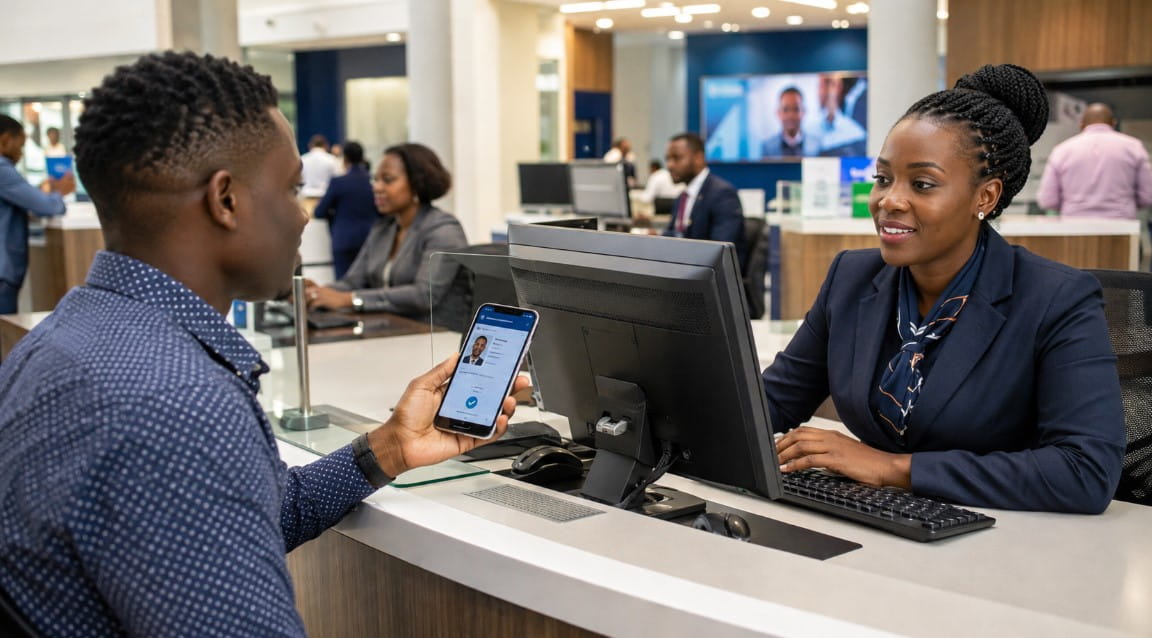
Every day, people prove who they are dozens of times without giving it much thought. Opening a bank account, logging into a mobile banking app, applying for a loan, registering for government services, buying insurance, or sending money abroad all begin with one requirement: identity verification.
As more services move online, digital identity has become the foundation of the modern economy. Yet the systems used to verify identity were largely designed decades ago. They depend on centralized databases, repeated document submissions, usernames, passwords, and multiple copies of the same personal information being stored across different organizations.
This approach creates several problems. Customers repeatedly upload identical identification documents, businesses spend significant resources verifying information that has already been verified elsewhere, and cybercriminals continue exploiting centralized databases through phishing, identity theft, and large-scale data breaches.
Blockchain introduces a different model.
Instead of relying on multiple organizations to own and control a person’s identity, blockchain supports decentralized digital identity, where individuals securely manage their own verified credentials while deciding when, where, and with whom they share them.
The result is a system that improves privacy, strengthens security, reduces fraud, and simplifies identity verification across financial services and many other sectors.
For countries like Kenya, where digital financial services continue expanding rapidly, trusted digital identity could become one of the most important building blocks for financial inclusion, secure online services, and efficient customer onboarding.
2. What Is Blockchain Digital Identity?
2.1 Definition
Blockchain digital identity is a decentralized approach to creating, managing, and verifying digital identities using blockchain technology.
Rather than storing identity information inside one organization’s database, blockchain enables trusted identity credentials to be securely issued, verified, and managed across a distributed network while allowing individuals to remain in control of their own personal information.
The blockchain itself does not normally store sensitive personal data. Instead, it stores cryptographic proofs that verify the authenticity of digital credentials without exposing unnecessary information.
2.2 What Is Digital Identity?
A digital identity is the electronic representation of a person, organization, or device.
It consists of verified information that allows someone to prove who they are when accessing digital services.
Examples include:
- National identification details.
- Passports.
- Driving licences.
- Academic certificates.
- Employment records.
- Bank account verification.
- Insurance membership.
- Professional licences.
- Biometric authentication.
Together, these credentials establish trust between individuals and service providers.
2.3 Traditional Identity vs. Decentralized Identity
Today’s identity systems are largely centralized.
Banks maintain customer databases.
Insurance companies maintain policyholder databases.
Government agencies maintain citizen records.
Universities maintain academic records.
Healthcare providers maintain patient records.
Each institution independently stores and verifies similar information, resulting in duplicated effort, inconsistent records, and increased cybersecurity risks.
Blockchain introduces decentralized identity.
Instead of multiple organizations owning copies of your identity, you own your digital credentials and share only the information required for a specific transaction.
For example, instead of sending a copy of your national ID to prove you are over 18, a digital credential could simply confirm that requirement without revealing your identification number, date of birth, or home address.
This approach significantly improves privacy while maintaining trust.
2.4 The Evolution of Identity Management
Identity verification has evolved considerably over time.
Initially, identification relied on physical documents such as birth certificates, passports, and national identity cards.
As services became digital, organizations created online accounts supported by usernames and passwords.
Later, multi-factor authentication introduced additional security through one-time passwords, biometrics, and authentication applications.
Blockchain represents the next stage of this evolution.
Instead of proving identity through repeated document submissions and centralized databases, individuals can use cryptographically verified digital credentials that remain under their control while being trusted by multiple organizations.
This shift moves identity management from organization-centric systems to user-centric systems.
3. How Blockchain Digital Identity Works
Understanding blockchain digital identity becomes much easier when viewed as a trust framework rather than simply another database.
Traditional identity systems require every organization to verify and store customer information independently. Blockchain changes this by allowing trusted credentials to be issued once, securely stored by the individual, and verified whenever needed without repeatedly sharing the same personal documents.
Several technologies work together to make this possible.
3.1 Distributed Ledgers
A blockchain is a distributed ledger shared across multiple computers rather than controlled by a single organization.
Unlike traditional databases, records added to a blockchain cannot be altered without consensus from the network. This creates an immutable record that strengthens trust and reduces opportunities for fraud.
In digital identity systems, the blockchain typically stores cryptographic proofs rather than personal information itself.
For example, instead of storing your passport details on the blockchain, the system stores proof that a trusted authority issued and verified your credential.
This protects privacy while maintaining authenticity.
3.2 Decentralized Identifiers (DIDs)
At the heart of blockchain identity is the Decentralized Identifier (DID).
A DID is a globally unique digital identifier that belongs entirely to the individual rather than an organization.
Unlike usernames or account numbers created by companies, a DID is:
- Permanent.
- Cryptographically secure.
- Globally unique.
- Controlled by its owner.
- Independent of any single institution.
An individual can use the same decentralized identity across multiple trusted services without creating separate identity records for every organization.
This significantly reduces duplication while giving users greater control over their personal information.
3.3 Verifiable Credentials
Verifiable Credentials are digital versions of trusted documents.
They function much like physical certificates but include cryptographic signatures that allow instant verification.
Examples include:
- National ID cards.
- Passports.
- Driving licences.
- Academic certificates.
- Professional licences.
- Employment records.
- Insurance membership.
- Bank verification.
- Business registration certificates.
Once issued by a trusted organization, these credentials can be presented digitally without requiring the issuing institution to manually verify them each time.
For example, a university could issue a digital degree certificate. An employer can instantly verify that credential without contacting the university directly.
3.4 Digital Identity Wallets
Digital identity wallets securely store an individual’s credentials.
Unlike traditional wallets that hold physical cards, digital wallets contain encrypted identity credentials under the user’s control.
A typical identity wallet may store:
- National identification.
- Passport credentials.
- Driver’s licence.
- Banking verification.
- Insurance information.
- Educational qualifications.
- Professional certifications.
When requesting access to a service, users decide exactly which credentials to share.
Instead of revealing an entire document, they can often disclose only the information required.
For instance, proving legal adulthood does not require revealing a home address or identification number.
This concept is known as selective disclosure, and it represents one of the biggest privacy improvements offered by decentralized identity.
3.5 Public and Private Keys
Blockchain identity relies on public key cryptography.
Each user possesses two cryptographic keys.
Private Key
The private key remains secret and proves ownership of the digital identity.
It should never be shared with anyone.
Public Key
The public key can be shared openly.
It allows organizations to verify digital signatures and authenticate credentials without exposing sensitive information.
Together, these keys allow secure authentication without relying solely on usernames and passwords.
3.6 Identity Verification Process
A simplified blockchain identity verification process typically follows these steps:
- A trusted organization issues a digital credential.
- The credential is cryptographically signed.
- The user stores it securely in a digital identity wallet.
- A service provider requests proof of identity.
- The user shares only the required credential.
- The receiving organization verifies the cryptographic signature using the blockchain.
- The credential is accepted without repeatedly contacting the original issuer.
This entire process can take only a few seconds while maintaining a high level of trust.
4. Why Digital Identity Matters
Digital identity has become one of the most valuable assets in today’s economy.
Almost every online interaction depends on accurately verifying who someone is before providing access to services, financial products, healthcare, education, or government platforms.
As digital services continue expanding, identity systems have become both increasingly important and increasingly vulnerable.
4.1 Identity Theft
Identity theft continues to grow worldwide.
Criminals obtain personal information through phishing attacks, hacked databases, social engineering, malware, or stolen documents. They then use that information to impersonate victims, open fraudulent accounts, apply for loans, or commit financial crimes.
Because traditional systems rely heavily on static information such as ID numbers and passwords, stolen credentials can often be reused across multiple platforms.
Blockchain-based identity significantly reduces this risk by replacing static identifiers with cryptographically verified credentials that are much harder to forge or misuse.
4.2 Data Breaches
Centralized databases remain attractive targets for cybercriminals.
When a large organization suffers a security breach, millions of customer records may be exposed at once.
Recent years have shown that even major corporations and government agencies are vulnerable to sophisticated cyberattacks.
Decentralized identity reduces this concentration of sensitive information.
Instead of maintaining countless copies of personal data across many organizations, verified credentials remain under the control of the individual, reducing the amount of sensitive information stored in centralized systems.
4.3 Fraud
Financial fraud often succeeds because organizations struggle to verify identity efficiently.
Fraudsters may:
- Use stolen identities.
- Submit forged documents.
- Create synthetic identities.
- Manipulate customer records.
- Exploit weaknesses in onboarding processes.
Blockchain strengthens verification by making credentials cryptographically verifiable and resistant to tampering.
This improves trust while reducing opportunities for impersonation and document fraud.
4.4 Financial Inclusion
Millions of people around the world remain excluded from formal financial services because they cannot easily prove their identity.
Without trusted identification, individuals may struggle to:
- Open bank accounts.
- Access loans.
- Purchase insurance.
- Register businesses.
- Receive government benefits.
Portable digital identity can simplify onboarding while making financial services more accessible, particularly in regions where formal identification remains limited.
This creates opportunities for broader financial inclusion without compromising security.
4.5 Customer Privacy
Many digital services collect significantly more personal information than they actually need.
For example, proving legal age should not require revealing an identification number, residential address, or full date of birth.
Blockchain identity introduces a privacy-first approach.
Through selective disclosure, individuals share only the minimum information necessary for each transaction.
This protects personal privacy while still allowing organizations to verify eligibility, compliance, or identity with confidence.
5. Benefits of Blockchain Digital Identity
Blockchain digital identity delivers benefits that extend beyond stronger cybersecurity. It transforms how people, businesses, financial institutions, and governments establish trust in digital interactions.
By giving individuals greater control over their identity while simplifying verification, decentralized identity can improve efficiency across entire industries.
5.1 Better Security
Security is one of the strongest advantages of blockchain-based identity.
Traditional identity systems often rely on centralized databases that become attractive targets for cybercriminals. If attackers successfully compromise one database, they may gain access to millions of customer records.
Blockchain reduces this risk by using cryptographic verification instead of depending solely on centrally stored personal data.
Additional security benefits include:
- Cryptographic authentication.
- Tamper-resistant credentials.
- Reduced reliance on passwords.
- Secure digital signatures.
- Immutable verification records.
Together, these features make identity fraud significantly more difficult.
5.2 Greater Privacy
Most organizations collect more personal information than necessary.
For example, proving eligibility for a financial product may only require confirmation that a customer meets certain criteria. It rarely requires sharing every personal detail contained on an identification document.
Blockchain identity supports privacy by design.
Using verifiable credentials and selective disclosure, users decide exactly what information to share.
Instead of revealing:
- National ID number.
- Date of birth.
- Home address.
- Full identification document.
A customer may simply prove:
- They are over 18 years old.
- They reside in Kenya.
- Their identity has been verified by a trusted authority.
This minimizes unnecessary exposure of personal data.
5.3 User Ownership and Control
Traditional identity systems are largely controlled by institutions.
Banks control banking records.
Governments control identity databases.
Universities control academic records.
Insurance companies manage policyholder information.
With decentralized identity, ownership shifts toward the individual.
Users control:
- Their credentials.
- Who receives them.
- When they are shared.
- How much information is disclosed.
Organizations verify credentials rather than permanently storing unnecessary personal information.
This represents one of the most significant changes introduced by blockchain identity.
5.4 Faster Verification
Identity verification often delays customer onboarding.
Opening a bank account, applying for insurance, requesting a loan, or registering a business may involve repeated document reviews that take hours or even days.
Blockchain dramatically reduces these delays.
Since credentials are cryptographically signed by trusted issuers, organizations can verify them almost instantly.
Benefits include:
- Faster customer onboarding.
- Quicker account opening.
- Reduced paperwork.
- Shorter approval times.
- Improved customer satisfaction.
5.5 Lower Compliance Costs
Know Your Customer (KYC) and Anti-Money Laundering (AML) compliance require substantial resources.
Financial institutions invest heavily in:
- Identity verification.
- Document storage.
- Compliance reviews.
- Manual audits.
- Record management.
Reusable digital credentials reduce repetitive verification while maintaining regulatory compliance.
Instead of independently verifying the same customer multiple times, institutions can verify trusted credentials that have already been issued by authorized organizations.
This lowers operational costs while improving efficiency.
5.6 Improved Customer Experience
Customers increasingly expect digital services to be simple, secure, and convenient.
Repeatedly uploading the same documents creates frustration and slows access to financial services.
Blockchain identity streamlines this experience.
Customers can:
- Reuse trusted credentials.
- Complete onboarding faster.
- Access multiple services with fewer documents.
- Maintain better control over personal information.
- Reduce repetitive verification requests.
This creates smoother interactions while maintaining high security standards.
5.7 Better Fraud Prevention
Fraud remains one of the most expensive challenges facing financial institutions.
Forged documents, synthetic identities, stolen credentials, and impersonation attacks create significant financial losses each year.
Blockchain strengthens fraud prevention by making credentials:
- Cryptographically verifiable.
- Difficult to alter.
- Easy to authenticate.
- Resistant to forgery.
Organizations gain greater confidence that presented credentials genuinely originate from trusted issuers.
6. Blockchain Digital Identity in Financial Services
Financial services depend on trust.
Every account opened, loan approved, insurance policy issued, or payment processed begins with verifying the identity of the customer.
Blockchain digital identity improves this entire process by making verification faster, more secure, and more efficient across multiple financial sectors.
6.1 Banking
Banks verify customer identity before opening accounts, approving loans, issuing cards, or processing high-value transactions.
Traditional onboarding often requires customers to submit multiple physical or digital documents.
Blockchain simplifies this process by allowing customers to present trusted digital credentials that banks can verify immediately.
Potential banking benefits include:
- Faster account opening.
- Improved customer onboarding.
- Reduced document fraud.
- Lower compliance costs.
- Better customer experience.
This supports both retail and commercial banking operations.
6.2 Insurance
Insurance providers rely heavily on identity verification throughout the customer journey.
Identity must be confirmed when:
- Purchasing policies.
- Filing claims.
- Receiving payouts.
- Updating beneficiary information.
Blockchain identity reduces administrative work while helping insurers detect fraudulent claims and duplicate identities.
It also improves customer convenience by reducing repeated document submissions.
6.3 SACCOs
Savings and Credit Cooperative Organizations manage large member databases that require continuous verification.
Blockchain identity can improve SACCO operations by:
- Simplifying member registration.
- Strengthening identity verification.
- Reducing duplicate records.
- Supporting secure digital onboarding.
- Improving compliance with KYC requirements.
For Kenyan SACCOs expanding digital services, trusted digital identity could significantly improve operational efficiency.
6.4 Payments
Digital payments depend on accurately identifying both senders and recipients.
Blockchain identity helps payment providers verify users without repeatedly requesting identification documents.
This supports:
- Mobile payments.
- Online banking.
- Merchant payments.
- Digital wallets.
- Cross-platform financial services.
The result is faster transactions with stronger identity assurance.
6.5 Remittances
Cross-border remittances often involve extensive identity verification to comply with international regulations.
Customers may repeatedly provide passports, national IDs, proof of address, and additional documentation.
Reusable digital credentials reduce duplication while maintaining regulatory compliance.
This shortens processing times and improves the customer experience for international money transfers.
6.6 Lending
Identity verification remains one of the first stages of any lending process.
Banks, SACCOs, and digital lenders must verify applicants before assessing creditworthiness.
Blockchain identity can streamline loan applications by allowing verified credentials to be securely shared between trusted institutions, reducing manual document reviews.
6.7 Investment Platforms
Investment firms also require reliable customer identification before granting access to financial markets.
Digital identity can improve:
- Investor onboarding.
- Regulatory compliance.
- Account security.
- Portfolio access.
- Digital investment services.
As investment platforms continue moving online, secure identity verification becomes increasingly important.
7. Real-World Applications of Blockchain Digital Identity
Blockchain digital identity is no longer a theoretical concept. Governments, financial institutions, technology companies, universities, and healthcare providers are already exploring or implementing decentralized identity solutions to improve trust, reduce fraud, and simplify digital interactions.
As adoption grows, these applications are expected to become a standard part of digital services.
7.1 Digital Customer Onboarding
Customer onboarding is one of the first areas where blockchain digital identity delivers measurable value.
Opening a bank account, purchasing insurance, registering a SACCO membership, or signing up for a financial application often requires customers to repeatedly submit the same documents.
A decentralized identity allows customers to reuse trusted credentials that have already been verified by authorized institutions.
Benefits include:
- Faster registration.
- Fewer documents to upload.
- Reduced manual verification.
- Lower onboarding costs.
- Improved customer satisfaction.
Organizations also spend less time reviewing identical information for returning customers.
7.2 Know Your Customer (KYC)
KYC is a legal requirement for financial institutions worldwide.
Banks, insurance companies, SACCOs, investment firms, and payment providers must verify customer identities before offering financial services.
Traditional KYC processes often involve:
- Identity document verification.
- Proof of address.
- Employment confirmation.
- Source of funds checks.
- Customer risk assessments.
Blockchain enables reusable KYC credentials.
Once a trusted institution has completed identity verification, customers may securely share verified credentials with other participating organizations, reducing repetitive verification while maintaining regulatory compliance.
This creates significant efficiency across the financial sector.
7.3 Account Opening
Opening financial accounts frequently involves lengthy verification procedures.
Customers may wait hours or days while institutions manually review submitted documents.
Blockchain identity accelerates this process through trusted digital credentials that can be verified almost instantly.
This improves:
- Bank account opening.
- Mobile wallet registration.
- Investment account creation.
- Insurance policy enrollment.
- SACCO membership registration.
Customers gain faster access to services without compromising security.
7.4 Cross-Border Financial Services
International financial services often involve complex identity verification because multiple jurisdictions must comply with different regulations.
Customers transferring money, opening overseas accounts, or investing internationally frequently repeat the same identity checks.
Blockchain identity allows trusted credentials to travel securely across borders.
Potential benefits include:
- Faster customer verification.
- Reduced administrative costs.
- Lower fraud risk.
- Improved compliance.
- Better customer experience.
As international interoperability standards continue developing, decentralized identity could significantly simplify cross-border financial services.
7.5 Government Services
Governments manage some of the largest identity systems in the world.
Citizens routinely use government-issued credentials to access services such as:
- National identification.
- Tax registration.
- Social protection.
- Healthcare.
- Business registration.
- Passport applications.
- Driver licensing.
- Voting registration.
Blockchain digital identity can improve these services by reducing fraud, strengthening authentication, and giving citizens greater control over their personal information.
Rather than repeatedly submitting the same documents to different government departments, verified credentials could be securely reused across multiple public services.
7.6 Healthcare
Healthcare depends heavily on accurate identity management.
Hospitals and clinics must ensure medical records belong to the correct patient while protecting sensitive health information.
Blockchain identity can help:
- Verify patient identity.
- Secure medical records.
- Reduce duplicate patient files.
- Improve referral systems.
- Strengthen patient privacy.
Patients also gain greater visibility into who accesses their medical information.
7.7 Education
Educational institutions issue credentials that remain valuable throughout a person’s career.
Degrees, diplomas, professional certificates, and training records often require manual verification by employers.
Blockchain enables educational institutions to issue verifiable digital credentials that employers can authenticate instantly.
This reduces:
- Certificate fraud.
- Verification delays.
- Administrative workload.
Graduates benefit from portable credentials that remain accessible throughout their professional lives.
8. Challenges and Risks
Although blockchain digital identity offers significant advantages, widespread adoption will require overcoming technical, regulatory, and organizational challenges.
Understanding these limitations helps organizations make informed implementation decisions.
8.1 Regulation
Digital identity operates within complex legal environments.
Countries maintain different laws governing:
- Identity verification.
- Privacy.
- Data protection.
- Electronic signatures.
- Digital records.
- Cross-border data sharing.
Organizations implementing blockchain identity must ensure compliance with applicable regulations.
In Kenya, this includes requirements under the Data Protection Act and oversight by the Office of the Data Protection Commissioner (ODPC).
As decentralized identity continues evolving, regulatory frameworks are also expected to mature.
8.2 Adoption
Technology alone does not create transformation.
For decentralized identity to succeed, multiple organizations must adopt compatible systems and trust common standards.
Successful implementation requires participation from:
- Governments.
- Banks.
- Insurance companies.
- SACCOs.
- Payment providers.
- Employers.
- Universities.
- Technology companies.
Without broad collaboration, the full benefits of reusable digital identity cannot be realized.
8.3 Interoperability
Different blockchain platforms often use different technical architectures.
If identity systems cannot communicate with one another, users may still experience fragmented verification processes.
International standards such as Decentralized Identifiers (DIDs) and Verifiable Credentials (VCs) are helping improve interoperability, but consistent implementation remains an ongoing challenge.
Achieving seamless compatibility across industries will be essential for long-term success.
8.4 User Education
Many people are unfamiliar with concepts such as:
- Digital wallets.
- Cryptographic keys.
- Decentralized identifiers.
- Verifiable credentials.
Without proper education, users may struggle to understand how to manage their digital identities securely.
Organizations introducing decentralized identity should invest in clear guidance, user-friendly interfaces, and ongoing awareness programs.
8.5 Privacy Management
Blockchain strengthens privacy, but implementation must be carefully designed.
Developers must ensure that:
- Personal information is not unnecessarily stored on-chain.
- Users control consent.
- Data sharing remains transparent.
- Sensitive information stays protected.
Poor implementation can undermine many of blockchain’s privacy advantages.
Privacy should therefore remain a design principle rather than an afterthought.
8.6 Technology Maturity
Although decentralized identity has made significant progress, the technology continues to evolve.
Industry standards are still developing, and many large-scale implementations remain in the early stages.
Organizations considering adoption should focus on solutions that follow internationally recognized standards and can adapt as technology continues maturing.
Early adoption should balance innovation with long-term sustainability.
9. Blockchain Digital Identity in Kenya
Kenya has established itself as one of Africa’s leading digital economies. The widespread adoption of mobile money, online banking, digital government services, and fintech innovation has created an environment where secure digital identity is becoming increasingly important.
As financial services continue moving online, trusted digital identity will play a central role in improving security, expanding financial inclusion, and simplifying access to both public and private services.
9.1 Kenya’s Current Digital Identity Landscape
Kenya already operates several digital identity systems that support access to government and financial services.
These include:
- National Identity Card.
- Passport.
- eCitizen platform.
- KRA PIN.
- NHIF (transitioning under broader health reforms).
- NSSF registration.
- Business registration services.
These systems have significantly improved digital service delivery, but many still operate independently.
As a result, citizens often submit the same information repeatedly when interacting with different organizations.
Blockchain-based identity could improve interoperability while reducing duplication and strengthening privacy.
9.2 Opportunities for Financial Institutions
Banks, SACCOs, insurance companies, and fintech firms all perform identity verification before delivering financial services.
Decentralized identity could help these institutions by:
- Reducing customer onboarding time.
- Improving KYC efficiency.
- Lowering operational costs.
- Detecting identity fraud earlier.
- Simplifying digital account opening.
- Improving customer experience.
Instead of verifying identical documents multiple times, institutions could rely on trusted digital credentials issued by authorized organizations.
9.3 Supporting Financial Inclusion
Although Kenya has made significant progress in financial inclusion, some individuals still face challenges accessing formal financial services because identity verification remains difficult or expensive.
Trusted digital identity could make it easier for more people to access:
- Bank accounts.
- SACCO membership.
- Insurance products.
- Credit facilities.
- Digital payment platforms.
- Government financial support.
Simplifying identity verification can reduce barriers without compromising regulatory compliance.
9.4 Strengthening Digital Government
Government agencies frequently verify citizen identity before delivering services.
Blockchain identity could support digital government by improving:
- Citizen authentication.
- Secure document verification.
- Service interoperability.
- Data accuracy.
- Fraud prevention.
- Privacy protection.
Rather than creating entirely new identity systems, blockchain could strengthen trust between existing digital services while giving citizens greater control over their personal information.
9.5 Challenges to Adoption in Kenya
Despite its potential, decentralized identity will not be adopted overnight.
Several factors will influence implementation.
These include:
- Regulatory readiness.
- Public awareness.
- Technology infrastructure.
- Institutional collaboration.
- International standards.
- Cybersecurity capacity.
- Investment costs.
Success will require cooperation between government agencies, regulators, financial institutions, technology providers, and standards organizations.
9.6 Future Outlook
Kenya has consistently demonstrated its ability to adopt digital financial innovations.
The success of mobile money, digital lending, online banking, and government digital services illustrates the country’s willingness to embrace new technologies that solve real problems.
As global standards for decentralized identity continue to mature, Kenya is well positioned to integrate blockchain-based identity into its broader digital transformation agenda.
The focus is unlikely to be replacing existing identity systems. Instead, blockchain will strengthen trust, improve interoperability, and make digital services more secure and efficient.
10. The Future of Digital Identity
Digital identity is evolving from a simple authentication tool into critical digital infrastructure.
Over the next decade, advances in blockchain, artificial intelligence, cryptography, and international identity standards are expected to reshape how individuals prove who they are online.
10.1 Passwordless Authentication
Passwords remain one of the weakest points in digital security.
Weak passwords, password reuse, and phishing attacks continue to expose millions of users to cybercrime.
Blockchain identity supports passwordless authentication by using cryptographic credentials rather than relying solely on usernames and passwords.
This approach improves both security and user experience.
10.2 Artificial Intelligence and Digital Identity
Artificial intelligence is expected to work alongside decentralized identity rather than replace it.
AI can help:
- Detect suspicious login behaviour.
- Identify fraudulent activity.
- Assess transaction risk.
- Monitor unusual identity usage.
- Strengthen fraud prevention.
Blockchain provides trusted identity data, while AI enhances decision-making through intelligent analysis.
Together, these technologies create stronger digital trust.
10.3 Cross-Border Digital Identity
Global trade, travel, education, and financial services increasingly require trusted international identity verification.
Future decentralized identity systems may allow individuals to securely use verified credentials across different countries without repeatedly submitting physical documents.
This could simplify:
- International banking.
- Cross-border payments.
- Remittances.
- Immigration processes.
- International education.
- Employment verification.
Achieving this vision will depend on international cooperation and shared technical standards.
10.4 Digital Identity Wallets
Digital wallets are expected to become central to identity management.
Rather than carrying multiple physical cards and documents, individuals may securely manage verified credentials through mobile devices.
Future identity wallets could store:
- National identification.
- Driver’s licence.
- Passport.
- Educational certificates.
- Professional licences.
- Banking credentials.
- Insurance policies.
- Health records.
Users would then decide which credentials to share with each service provider.
10.5 Identity as Digital Infrastructure
Identity is becoming as fundamental to the digital economy as payment systems or internet connectivity.
Without trusted identity, secure digital transactions become significantly more difficult.
Blockchain does not replace identity. It modernizes how trust is established, verified, and managed.
As governments, financial institutions, and technology providers continue digitizing services, decentralized identity is likely to become one of the foundational technologies supporting secure digital ecosystems worldwide.
11. Frequently Asked Questions
11.1 What is blockchain digital identity?
Blockchain digital identity is a decentralized system that uses blockchain technology to securely create, manage, and verify digital identities while giving individuals greater control over their personal information.
11.2 What is decentralized identity?
Decentralized identity is a model where individuals own and manage their digital credentials instead of relying entirely on centralized organizations to store and control their identity data.
11.3 What is self-sovereign identity (SSI)?
Self-sovereign identity is an approach to digital identity where individuals control how their personal information is stored and shared, using trusted digital credentials issued by authorized organizations.
11.4 Does blockchain store my personal information?
In most implementations, no.
Blockchain typically stores cryptographic proofs that verify credentials rather than sensitive personal data itself. The actual credentials remain securely stored in the user’s digital identity wallet.
11.5 How does blockchain improve identity verification?
Blockchain enables organizations to verify cryptographically signed credentials quickly and securely without repeatedly requesting the same physical documents.
11.6 Can blockchain reduce identity theft?
Yes.
Cryptographic verification, tamper-resistant credentials, and decentralized identity management make identity theft and document fraud significantly more difficult than in traditional systems.
11.7 How does blockchain support KYC?
Blockchain enables reusable digital credentials that simplify customer verification while helping financial institutions maintain compliance with Know Your Customer (KYC) requirements.
11.8 Is blockchain digital identity private?
Yes, when properly implemented.
Users control what information they share and can often disclose only the minimum data required for a transaction through selective disclosure.
11.9 Is blockchain digital identity already being used?
Yes.
Governments, financial institutions, technology companies, universities, and healthcare organizations around the world are actively developing and implementing decentralized identity solutions, although adoption remains at different stages across industries.
11.10 Could blockchain digital identity work in Kenya?
Yes.
Given Kenya’s strong digital financial ecosystem, growing fintech sector, and expanding digital government services, blockchain-based digital identity has significant potential to improve financial services, customer onboarding, fraud prevention, and digital inclusion.
Conclusion
Trust has always been at the heart of financial services, and in an increasingly digital world, that trust begins with identity. Every online account, payment, insurance policy, loan application, and government service depends on the ability to verify who someone is quickly, accurately, and securely.
Blockchain introduces a new approach to digital identity by shifting control from fragmented, centralized databases to individuals who can securely manage their own verified credentials. This reduces duplication, strengthens privacy, improves security, and simplifies identity verification without compromising trust.
For financial institutions, decentralized identity offers faster customer onboarding, stronger fraud prevention, lower compliance costs, and a better customer experience. For individuals, it provides greater control over personal information while reducing the need to repeatedly submit sensitive documents.
As Kenya continues expanding digital financial services and government platforms, trusted digital identity has the potential to become a critical piece of the country’s digital infrastructure. While challenges around regulation, interoperability, and adoption remain, the direction is clear. Secure, user-controlled digital identity will play an increasingly important role in building a more connected, efficient, and trusted digital economy.
For this kind of news, articles, tutorials and more, visit us at MUIAA Ltd where we offer research, advice and build modern day innovations in blockchain, fintech, and digital finance across emerging markets. We help turn ground-level realities into practical financial tools.